Functional Mushrooms and Stress: What the Research Actually Shows
You are stressed. That is probably not news to you. Between work, screens, sleep debt, and the general state of the world, your body is running a stress response more often than it was ever designed to. And if you have gone looking for natural options, you have almost certainly come across functional mushrooms marketed as the answer.
The problem is that most of what you will find online sits at one of two extremes. Either it is breathless marketing copy — "ancient wisdom meets modern science" — or it is outright dismissal. Neither is particularly useful.
So here is what we are actually going to do. We are going to walk through what scientists study when they examine functional mushrooms and the body's stress response. What compounds they are interested in. What the research has found so far. And — just as importantly — where the gaps are. No overselling. No underselling. Just the current state of the evidence, presented honestly.
---
What "Stress Response" Actually Means in Your Body
Before we talk about mushrooms, it is worth understanding what your body is actually doing when you feel stressed — because most supplement marketing skips right past this.
Your stress response is coordinated by something called the HPA axis — the hypothalamic-pituitary-adrenal axis. When your brain perceives a threat (a deadline, a difficult conversation, a near-miss in traffic), the hypothalamus signals the pituitary gland, which signals your adrenal glands to release cortisol.
Cortisol is not the villain it is often made out to be. You need it. It mobilises energy, sharpens attention, and helps you respond to genuine threats. The problem comes when this system stays activated for weeks or months at a time — what researchers call chronic stress. Persistently elevated cortisol is associated with disrupted sleep, changes in appetite, poor recovery, and that foggy, wired-but-tired feeling many people describe.
This is the context in which researchers have begun examining certain mushroom species. The question is not "can mushrooms cure stress" — that is not how any of this works. The question is whether specific bioactive compounds in these organisms interact with the pathways involved in the stress response. And the honest answer is: the research is early and not yet ready.
---
Reishi and the Stress Response: What Researchers Are Looking At
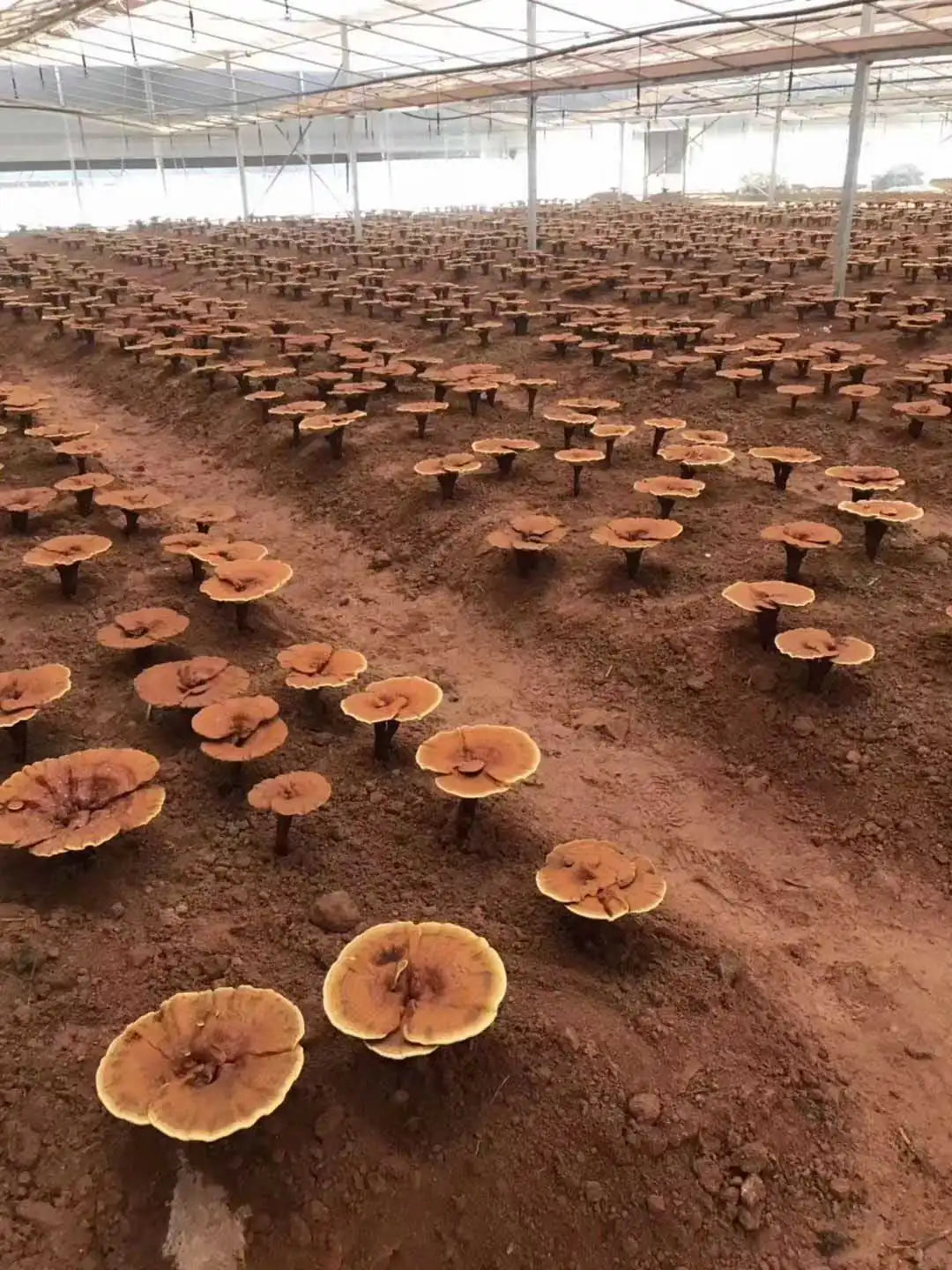
Of all functional mushroom species, Reishi (Ganoderma lucidum) has attracted the most research attention regarding the stress response. This is largely because of its unique chemical profile — specifically, a class of compounds called triterpenes, and within that group, ganoderic acids.
Ganoderic acids are alcohol-soluble compounds found primarily in the fruiting body. They are structurally complex, and researchers have identified over 130 distinct ganoderic acids in Reishi. In preclinical studies — meaning animal models and cell cultures, not human trials — certain ganoderic acids have been observed to influence markers associated with the HPA axis and cortisol regulation.
Several animal studies have explored whether Reishi extracts affect stress-related behaviour and cortisol levels. Some of these have reported measurable changes: reduced corticosterone levels (the rodent equivalent of cortisol), altered behaviour in stress tests, and changes in gene expression related to the stress response. These findings are genuinely interesting.
But here is the critical caveat. The majority of this research is preclinical. Animal models are valuable for identifying mechanisms and generating hypotheses, but they do not reliably predict human outcomes. The doses used in rodent studies often do not translate directly to human supplementation. And the extracts used in research settings are frequently characterised and standardised in ways that most commercial products are not.
There are a small number of human studies on Reishi, some of which have looked at quality of life, mood, and fatigue in specific populations. The results have been mixed — some positive signals, some null findings. No large-scale, well-controlled clinical trial has established a definitive effect of Reishi on the human stress response. That is the honest picture.
What we can say is that ganoderic acids are the compounds researchers are most interested in, and that research in this area is active and ongoing. Whether that translates into meaningful outcomes for someone taking a Reishi extract daily is a question science has not yet fully answered.
---
Lion's Mane and the Nervous System: A Different Angle
Lion's Mane (Hericium erinaceus) tends to come up in stress-related conversations, but the research angle is different from Reishi. Where Reishi research focuses on the HPA axis and cortisol, Lion's Mane research centres on the nervous system itself — specifically, a protein called nerve growth factor (NGF).
The compounds of interest here are hericenones, which are found in the fruiting body and are extracted using ethanol. In laboratory settings, hericenones have been studied for their relationship with NGF in cell culture models. NGF is involved in the maintenance and growth of neurons, and researchers have hypothesised that this mechanism could be relevant to how the nervous system handles prolonged periods of demand.
This is fascinating research. But we need to be careful about the leap from "stimulates NGF in a petri dish" to "helps you feel less stressed." Cell culture studies demonstrate biological activity, but they do not account for digestion, absorption, the blood-brain barrier, or the dozens of other variables that determine whether a compound actually reaches the relevant tissue in a living human at a meaningful concentration.
There are a handful of human studies on Lion's Mane. A frequently cited Japanese trial from 2009 (Nagano et al.) found that participants taking Lion's Mane reported improvements in mood-related markers compared to placebo. The study was small — 30 participants — and the methodology has limitations, but it is one of the few controlled human data points available.
More recent research is exploring Lion's Mane in the context of everyday wellbeing and nervous system support, but most of it remains preclinical. The compound identification work is solid; the human evidence is still catching up.
What matters practically is this: if hericenones are the compounds under investigation, then the extract you choose needs actually to contain them. Hericenones are alcohol-soluble, meaning they require ethanol extraction. A product made using only hot water extraction — or worse, ground-up mycelium on grain — is unlikely to contain meaningful levels of the compounds that researchers are actually studying.
---
Cordyceps and Energy Metabolism: A Peripheral but Relevant Piece
Cordyceps enters the stress conversation from a different angle entirely — not through cortisol or the nervous system directly, but through energy metabolism. The logic, from a research perspective, is that the body's capacity to handle prolonged demand is partly a function of how efficiently it produces and uses cellular energy.
The compound attracting the most research attention in Cordyceps is cordycepin (3'-deoxyadenosine), which is structurally similar to adenosine — a molecule involved in ATP production and energy signalling. Researchers are exploring whether cordycepin affects mitochondrial efficiency and cellular energy pathways, particularly under sustained physical or environmental demands.
Most of this work, again, is preclinical. Animal studies have explored cordycepin's effects on oxygen utilisation and exercise tolerance, with some reporting positive outcomes. A small number of human studies have examined Cordyceps in the context of physical performance, with modest and inconsistent findings.
One important technical distinction: the Cordyceps used in most research and commercial products is CS-4, a liquid-fermented mycelium strain of Cordyceps sinensis — not a fruiting body. This is one of the few cases in the functional mushroom space where mycelium is the legitimate source material, because wild Cordyceps sinensis fruiting bodies are prohibitively rare and expensive. The extraction process for CS-4 is also different: hot-water extraction first, followed by ethanol precipitation to concentrate compounds such as cordycepin.
The research on Cordyceps and energy metabolism is interesting, but it is a step removed from the direct stress response pathways that Reishi and Lion's Mane research addresses. Think of it as a complementary angle rather than a direct mechanism.
---
The Quality Gap: Why Most Products Miss the Point
Here is where we need to have an uncomfortable conversation. Even if the research on these species is promising — and in several areas, it genuinely is — most products on the market do not contain the compounds being studied.
This is not a minor detail. It is the central problem.
When a researcher publishes a study on ganoderic acids in Reishi, they are working with a characterised extract — they know exactly which compounds are present and at what concentrations. When you buy a Reishi product off the shelf, you are often getting something very different: a product with a beta-glucan percentage on the label (which may or may not be accurate) and no information about ganoderic acid content.
The same applies to Lion's Mane and hericenones, and to Cordyceps and cordycepin. If the product does not test for and standardise the specific compounds of interest to researchers, then the result does not apply to that product. You cannot cite a study on ganoderic acids to support a product that has never been tested for ganoderic acids.
There are a few specific quality markers to understand:
- Fruiting body extract vs mycelium on grain. For Reishi and Lion's Mane, the compounds of interest (ganoderic acids, hericenones) are concentrated in the fruiting body. Products made from mycelium grown on grain often contain high levels of starch filler and low levels of target bioactives. The exception is Cordyceps CS-4, where liquid-fermented mycelium is the legitimate source — but this is a controlled fermentation process, not mycelium grown on rice.
- Extraction method matters. Ganoderic acids and hericenones are alcohol-soluble. If a product uses only hot water extraction, these compounds are largely absent. Proper dual extraction — ethanol first to capture these compounds, then hot water for polysaccharides — is essential for a whole-profile extract.
- Third-party testing and Certificates of Analysis. Any serious manufacturer should be able to provide batch-specific COAs from an ISO 17025-accredited laboratory. Not just beta-glucan content, but species-specific compound testing — ganoderic acids for Reishi, hericenones for Lion's Mane, cordycepin for Cordyceps.
Without these markers, you are essentially buying a product and hoping it contains what the marketing implies. The research might be promising, but it is irrelevant if the product does not deliver the compounds.
---
What to Look for If You Want to Try Functional Mushrooms
If you have read this far and you are still interested — which you should be, because the research direction is genuinely worth following — here is a practical framework for evaluating products:
1. Check the source material. Is it fruiting body extract (for Reishi, Lion's Mane, Chaga) or liquid-fermented CS-4 mycelium (for Cordyceps)? If the label says "mycelium" for a species other than Cordyceps, or lists rice, oats, or grain in the ingredients, that is a red flag.
2. Ask about extraction. Dual extraction (ethanol + hot water) is necessary to capture the full range of bioactive compounds. Single-method extraction leaves significant compounds behind — particularly the alcohol-soluble ones that researchers are most interested in.
3. Look for species-specific standardisation. A product that lists only the beta-glucan percentage doesn't give you the full picture. Ganoderic acids (Reishi), diterpenes (Lion's Mane), and cordycepin (Cordyceps) are the markers that connect a product to the published research.
4. Demand third-party verification. COAs from an ISO 17025-accredited laboratory, specific to the batch you are buying. If a brand cannot or will not provide this, you have no way to verify their claims.
5. Be sceptical of dramatic claims. Any brand telling you their mushroom product will "eliminate stress" or "restore your calm" is making claims that the current evidence does not support. The research is exploring mechanisms and showing early signals — that is a long way from guaranteed outcomes.
---
For help choosing a Cordyceps product specifically, see our Cordyceps supplement guide.
Frequently Asked Questions
Can functional mushrooms reduce cortisol levels?
Some preclinical studies — primarily in animal models — have observed changes in cortisol-related markers after administration of Reishi extracts containing ganoderic acids. However, these findings have not been consistently replicated in well-controlled human trials. The research is exploring this question, but a definitive answer is not yet available.
Which mushroom species has the most research related to stress?
Reishi (Ganoderma lucidum) has the largest body of preclinical research on the stress response, primarily due to its ganoderic acid content and potential interactions with the HPA axis. Lion's Mane research approaches stress from a different angle, focusing on the nervous system and NGF. Neither species has sufficient human clinical evidence to make definitive claims.
Does extraction method affect whether a mushroom product contains the researched compounds?
Yes, significantly. Ganoderic acids (Reishi) and hericenones (Lion's Mane) are alcohol-soluble and require ethanol extraction. Products made using only hot water extraction, or those made from ground mycelium on grain, are unlikely to contain meaningful levels of these specific compounds. The extraction method directly determines whether a product is relevant to the published research.
Are the stress-related studies on functional mushrooms done on humans?
The majority are preclinical — meaning cell cultures and animal models. There are a small number of human studies, but they tend to be small in scale, limited in duration, and inconsistent in their findings. This does not mean the research is worthless; it means we are at an early stage, and anyone claiming certainty is getting ahead of the evidence.
What should I look for on a mushroom supplement label?
Fruiting body extract (not mycelium on grain, except for Cordyceps CS-4), dual extraction method, species-specific compound standardisation (ganoderic acids, diterpenes, cordycepin), and batch-specific Certificates of Analysis from an ISO 17025-accredited third-party laboratory. These are the markers that separate products backed by genuine quality assurance from those trading on marketing alone.
Get the Dosage & Timing Cheat Sheet
Exact amounts and best timing for all six species, on one page. Free PDF, straight to your screen.
Something went wrong; please try again.
You'll also get our occasional research-based newsletter. Unsubscribe any time.
Done. Here's your cheat sheet.
We've also emailed you a copy so you can find it later.
Download the PDFMycogenius Lion's Mane Extract
Organic fruiting body extract. Beta-glucans ≥35%. Third-party tested, batch COA published.
★★★★★ 4.7 on Trustpilot
Shop Lion's Mane