How to Add Mushroom Extracts to Your Kombucha (and Why It Works)
If you are already brewing kombucha at home — or even just buying a good one from the shop — you are the kind of person who pays attention to what goes into your body. You like fermented foods. You like knowing what is in the bottle. And you have probably seen "mushroom kombucha" popping up on social media and wondered whether it is worth the hype.
The short answer: it can be brilliant, but most of the guides floating around online get important details wrong. They gloss over which form of mushroom to use, they are vague on dosage, and some suggest adding raw mushroom pieces directly to your SCOBY — which is a waste of good mushrooms and a recipe for an off-tasting brew.
This guide covers the practical details. Which species work, how much to add, when to add it during the brewing process, and three tried-and-tested flavour combinations you can make this week.
Why Extracts — Not Raw Mushrooms or Tinctures
This is the most important thing to get right, and it is where most online recipes fall apart.
Raw mushrooms will not work well. The bioactive compounds in functional mushrooms — beta-glucans, diterpenes, ganoderic acids — are locked behind tough cell walls made of chitin. Your digestive system struggles to break down chitin on its own, and your kombucha's fermentation process won't do the job either. Dropping chunks of lion's mane into your brew might look interesting, but it will not deliver the compounds you are after.
Alcohol-based tinctures are a poor fit too. They can interfere with your SCOBY culture, alter the pH of your brew unpredictably, and the alcohol content — even if small — introduces a variable you do not want during fermentation.
Mushroom extract powders are what you want. Specifically, 1:1 water extracts. Here is why they work so well with kombucha:
- Water-soluble. A 1:1 water extract dissolves cleanly into liquid without leaving sediment, haze, or gritty texture at the bottom of your bottle. This matters far more than people realise — concentrated extracts (10:1 or 15:1 ratios) have significantly lower water solubility and will leave visible residue in your drink.
- SCOBY-safe. Extract powder will not interfere with the fermentation culture. No alcohol, no raw organic matter competing with the SCOBY, no unexpected pH shifts.
- Consistent dosing. With a standardised extract, you know how much you are putting into each bottle. With raw mushrooms, you are guessing.
- Already extracted. The hard work of breaking through those chitin cell walls has already been done through hot water extraction. The bioactive compounds are available and ready.
If you take one thing from this article: use a 1:1 water extract powder, not a tincture, not raw mushrooms, and not a highly concentrated extract. The solubility difference is not subtle — it is the difference between a smooth, drinkable kombucha and one with a layer of sludge at the bottom.
Which Species Work Best in Kombucha
Not all mushroom species behave the same in a fermented, slightly acidic, carbonated drink. Flavour, solubility, and how well they pair with kombucha's natural tartness all vary by species.
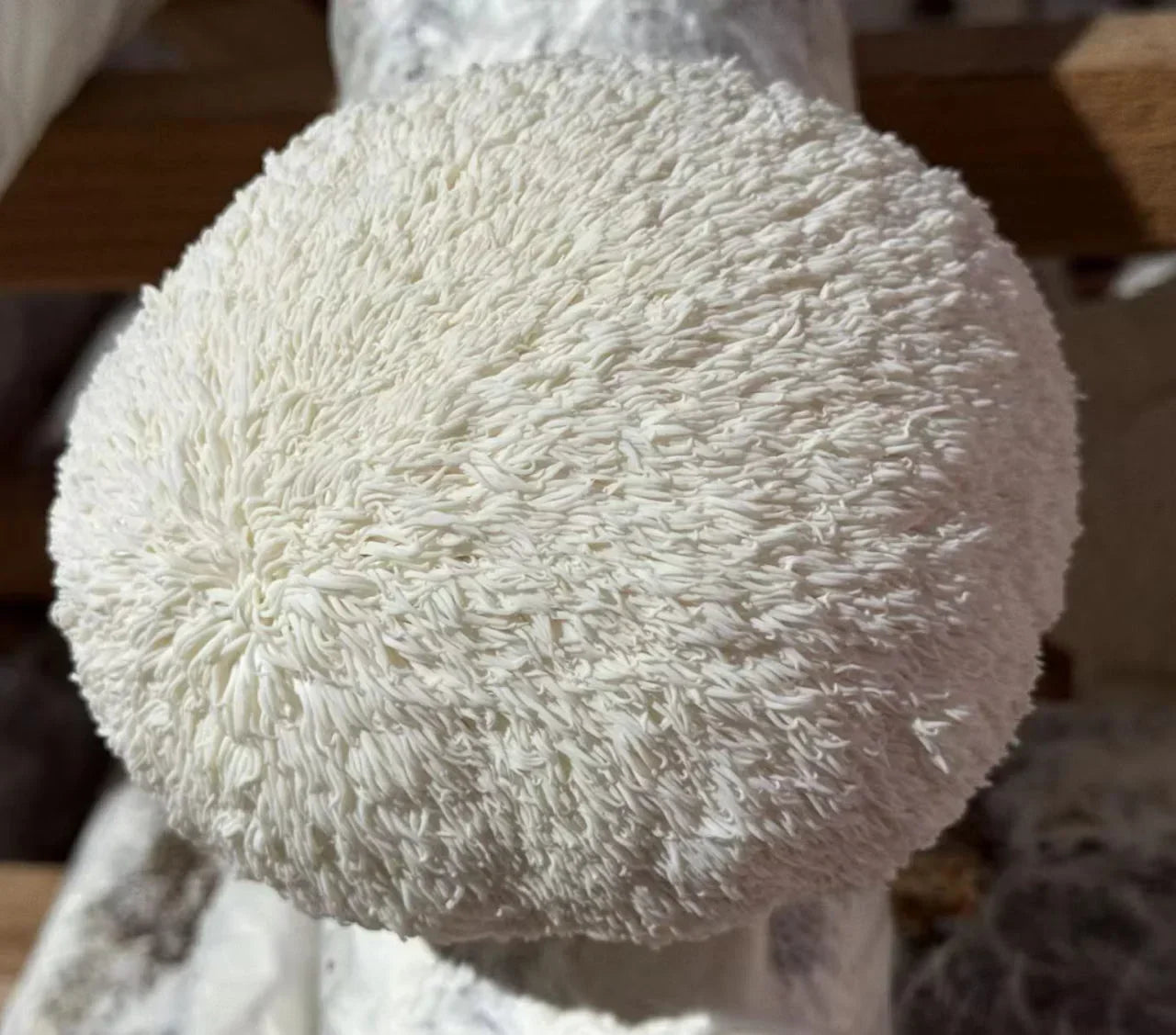
Lion's Mane — The Easy One
Lion's mane is the most forgiving species for kombucha. It has a mild, slightly earthy flavour that blends into most kombucha bases without fighting for attention. You will not taste it much at standard dosages (250–500 mg per 500 ml), which makes it ideal if you want to add a functional mushroom extract to your brew without changing the flavour profile you already enjoy.
It pairs well with citrus, ginger, and lighter fruit flavours. If this is your first time adding mushroom extract to kombucha, start here.
Cordyceps — The Neutral Addition
Cordyceps CS-4 extract has a relatively neutral taste profile — slightly sweet, not earthy, no bitterness to speak of. It disappears into kombucha almost entirely, making it an excellent choice when you want to keep the original flavour of your brew front and centre.
It works particularly well with green tea-based kombucha, where the lighter base lets both flavours coexist without clashing.
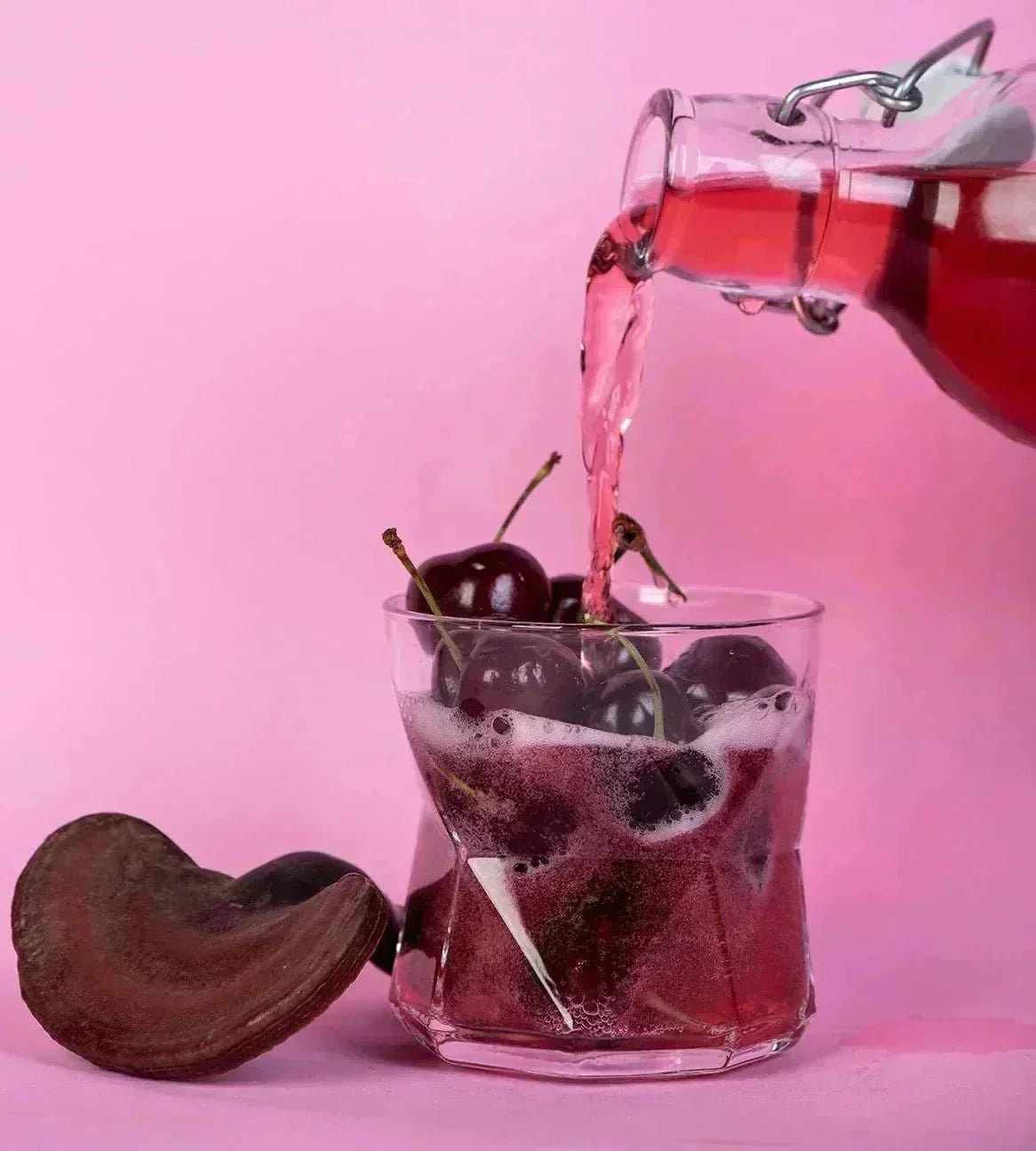
Reishi — The Bold Choice
Reishi is a different story. It is noticeably bitter — a deep, woody bitterness that will come through in your kombucha even at moderate dosages. This is not a flaw; it is the nature of the extract, driven by the ganoderic acids, which are among its key bioactive compounds. But it means you need to plan for it.
Reishi kombucha works beautifully when you lean into that bitterness rather than trying to hide it. Pair it with warming spices — cinnamon, cardamom, ginger, clove — or with citrus, which cuts through the bitterness and creates something genuinely interesting. Think of it like adding dark chocolate to a recipe: you would not dump it in without adjusting the other flavours.
Start with the lower end of the dosage range (250 mg per 500 ml) and work up from there.
Chaga — Worth Mentioning
Chaga extract has a mild, slightly vanilla-like flavour that can work in darker kombucha bases (black tea, chai-spiced). It is less commonly used in kombucha recipes, but if you enjoy chaga in other drinks, it translates well here.
When to Add It: Timing Matters
This is the second place most guides get it wrong. Timing is not a minor detail — it affects both the quality of your extract and the health of your SCOBY.
Do not add extract powder during primary fermentation. Your SCOBY is doing its work — converting sugars, producing acids, building carbonation. Introducing powder extract at this stage is unnecessary and risks throwing off the balance of your brew. The extract does not need to ferment; it is already processed and ready.
The ideal time is during the second ferment — just before bottling. This is when you typically add flavourings (fruit juice, ginger, herbs), and your mushroom extract goes in at the same stage. The process is simple:
- Measure out your extract powder (see dosage below).
- Add it to each bottle, or stir it into the batch before dividing into bottles.
- Stir or shake well to dissolve. A 1:1 water extract should incorporate smoothly; give it 20–30 seconds of good stirring.
- Bottle and cap as normal for your second ferment.
If you are using store-bought kombucha, even simpler: open, add extract, stir well with a chopstick or small spoon, reseal—no fermentation knowledge required. Just make sure you stir thoroughly — do not just dump the powder in and hope for the best.
How Much to Use
Keep it straightforward:
- 250 mg per 500 ml serving — a good starting point. Subtle. You will not notice much of a flavour (except with Reishi).
- 500 mg per 500 ml serving — a standard functional dose. This is where most people settle. With lion's mane and cordyceps, the flavour impact is still minimal. With Reishi, you will definitely taste it — plan your flavour pairings accordingly.
Use a small digital scale for accuracy. A quarter-teaspoon measuring spoon puts you roughly in the right range, but extract densities vary by species and brand, so a scale is more reliable for consistency.
A note on concentrated extracts: If you are using a 10:1 or 15:1 extract, the dosage would technically be lower for equivalent bioactive content — but the solubility problem makes this a poor choice for kombucha regardless. Stick with 1:1 water extracts for this application.
Three Simple Recipes
These are starting points, not rigid formulas. Adjust to your own taste.
1. Lion's Mane + Ginger + Lemon
The most accessible combination. Clean, bright, and easy to drink.
- 500 ml kombucha (any base — black tea or green tea both work)
- 500 mg lion's mane 1:1 water extract powder
- 1 tablespoon fresh ginger juice (or a few thin slices)
- Juice of half a lemon
Add the lion's mane extract and stir well. Add ginger and lemon. Bottle for a second fermentation (2–3 days at room temperature), or drink immediately if using store-bought kombucha. The ginger adds bite, the lemon adds brightness, and the lion's mane sits quietly underneath.
2. Cordyceps + Green Tea Kombucha
Minimalist and clean. This one is about letting the kombucha do the talking.
- 500 ml green tea kombucha
- 500 mg cordyceps CS-4 extract powder
- Optional: a small sprig of fresh mint or a teaspoon of honey
Stir the cordyceps extract into the kombucha until fully dissolved. The neutral flavour of cordyceps means you are not fighting any bitterness or earthiness — it integrates seamlessly. The green tea base keeps everything light. Add mint or honey only if your kombucha is on the tart side and you want to round it out.
3. Reishi + Chai Spices
The bold one. This is a drink with character — not for people who want their kombucha to taste the same as before.
- 500 ml black tea kombucha
- 250–500 mg Reishi extract powder (start at the lower end)
- 1 cinnamon stick or half a teaspoon of ground cinnamon
- 2–3 whole cardamom pods, lightly crushed
- 2–3 thin slices of fresh ginger
- A small piece of star anise (optional)
If doing a second ferment, add the Reishi extract and spices to the bottle before sealing. The spices will infuse over 2–3 days. If using store-bought kombucha, steep the spices in a small amount of warm water first (not boiling — you do not want to kill the live cultures when you combine them), strain, then add the spiced liquid and Reishi extract to your kombucha. Stir well.
The warming spices complement Reishi's bitterness rather than competing with it. The result is something closer to a chai-kombucha hybrid — earthy, spiced, and genuinely interesting.
Tips for Best Results
- Always stir properly. Even a 1:1 water extract needs 20–30 seconds of active stirring. Do not just sprinkle it on top and close the lid.
- Use powder extract, not tincture. This bears repeating. Alcohol-based tinctures are not designed for this application.
- Store as normal. Adding mushroom extract does not change how you store your kombucha. Keep it refrigerated after the second ferment, same as always.
- Start with one species. Get comfortable with how it tastes and dissolves before experimenting with blends. Mixing multiple extracts at once makes it harder to know what is contributing what.
- Taste before you bottle the whole batch. Make one test bottle first. Adjust dosage or flavour pairings before committing to the full run.
- Check your extract quality. This matters as much here as it does anywhere else. Look for third-party-tested fruiting-body extracts (except cordyceps CS-4, which is mycelium-based) with verified bioactive content. If the extract is padded with fillers, you are adding expensive nothing to your kombucha.
Frequently Asked Questions
Will mushroom extract affect my SCOBY?
No. A water-extracted mushroom powder will not interfere with your SCOBY culture. It is inert in the fermentation process — it does not introduce competing organisms, significantly alter the pH, or provide fermentable sugars. Add it during the second ferment or after fermentation is complete, and your SCOBY stays untouched.
Can I use mushroom capsules instead of powder?
Technically, you could open capsules and use the powder inside. But check what else is in the capsule first — some contain flow agents or other excipients that you may not want in your kombucha. A standalone powder extract gives you a cleaner result with no surprises.
Does the kombucha's acidity damage the mushroom compounds?
Beta-glucans and other key bioactive compounds in mushroom extracts are stable in acidic environments. The extraction process itself involves sustained high temperatures and varying pH conditions, so kombucha's mild acidity (typically pH 2.5–3.5) is not a concern for compound stability.
How long does mushroom kombucha last?
The same as any kombucha. Adding extract powder does not shorten shelf life. Keep it refrigerated after the second ferment and consume within your normal timeframe — typically 1–3 months for home-brewed, or by the best-before date for store-bought.
Get the Dosage & Timing Cheat Sheet
Exact amounts and best timing for all six species, on one page. Free PDF, straight to your screen.
Something went wrong; please try again.
You'll also get our occasional research-based newsletter. Unsubscribe any time.
Done. Here's your cheat sheet.
We've also emailed you a copy so you can find it later.
Download the PDFMycogenius Lion's Mane Extract
Organic fruiting body extract. Beta-glucans ≥35%. Third-party tested, batch COA published.
★★★★★ 4.7 on Trustpilot
Shop Lion's Mane