
What Is Chaga Mushroom? Benefits, Uses and Safety
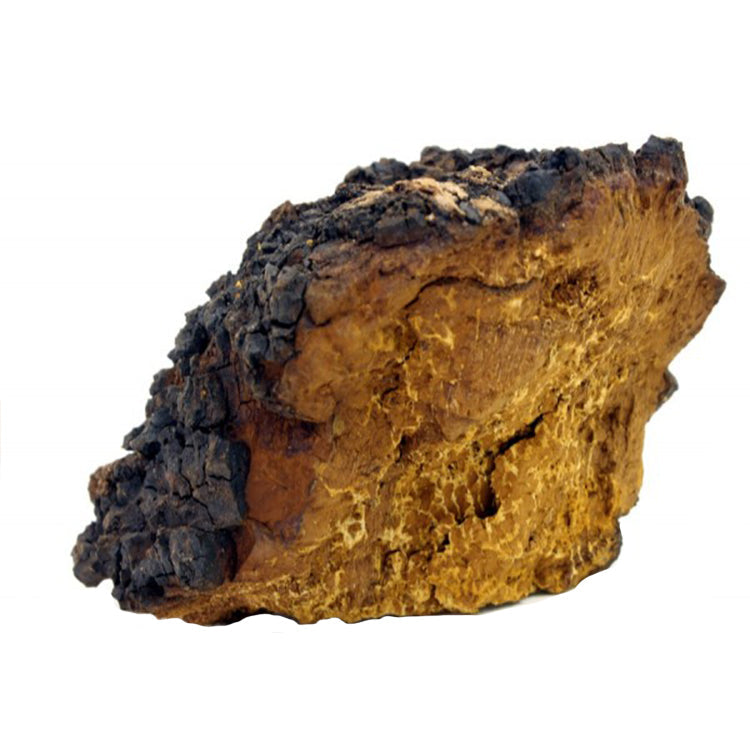
Chaga (Inonotus obliquus) is a slow-growing fungus that forms dark, irregular masses on the trunks of birch trees in cold climates across Russia, Scandinavia, Canada, and northern Asia. It is not technically a mushroom in the traditional sense. What you see on the outside of the tree is a sclerotium, a dense, hardened mass of mycelium and wood fibre, rather than a fruiting body. Its rough, blackened exterior and bright orange interior have earned it the nickname "black gold" among foragers.
Chaga has been used in Russian and Northern European folk medicine for centuries. The word "Chaga" itself derives from the Komi-Permyak language of the indigenous peoples of the Ural Mountains. It was famously referenced in Aleksandr Solzhenitsyn's 1966 novel Cancer Ward, where a character describes a "birch tree fungus" brewed as tea by Siberian peasants. That literary reference helped spark modern Western interest, but Chaga's traditional use long predates the book, and it was formally approved as a medicinal preparation ("Befungin") by the Soviet Medical Academy of Science in 1955.
This guide covers what Chaga actually is, what compounds it contains, what the research shows so far, and what you should know before taking it, including safety warnings that are rarely discussed.
What Is Chaga, Exactly?
Chaga belongs to the family Hymenochaetaceae and grows almost exclusively on birch trees (Betula species) in circumpolar regions. It is a parasitic fungus, meaning it draws nutrients from the living tree over years or even decades. The visible dark mass on the bark is the sclerotium, not a fruiting body. The actual fruiting body of Inonotus obliquus only appears after the host tree dies, and it is rarely seen or harvested.
This distinction matters for supplements. Most Chaga products are made from the sclerotium, which contains the majority of the bioactive compounds studied. The black outer layer is rich in melanin, while the inner orange-brown tissue contains polysaccharides, triterpenes, and other compounds.
How Chaga Grows
Chaga develops slowly over 10 to 20 years on a living birch tree. It cannot be commercially cultivated in the same way as Lion's Mane or Reishi, which can be grown on substrates in controlled environments. While laboratory-grown Chaga mycelium exists, it lacks many of the compounds found in wild sclerotia, particularly betulinic acid, which Chaga absorbs and converts from the birch bark itself.
This is why wild-harvested Chaga from birch trees is considered the gold standard for supplements, and why the source tree species matters. Chaga growing on non-birch trees does not contain betulin or betulinic acid.
What Compounds Does Chaga Contain?
Chaga's chemical profile is unusual among functional mushrooms. It contains compounds you would expect in a fungus (beta-glucans, polysaccharides) alongside compounds it absorbs from the birch tree itself (betulin, betulinic acid). Here are the main groups:
| Compound Group | What It Is | Extraction Method |
|---|---|---|
| Beta-glucans | Polysaccharides are found in fungal cell walls—the most studied class of compounds in functional mushrooms. | Hot water extraction |
| Betulinic acid | A triterpene derived from birch bark, betulin. Only present in birch-grown Chaga. Subject of extensive in vitro research. | Ethanol/alcohol extraction |
| Melanin | The dark pigment that gives Chaga its black exterior. A natural free radical scavenger. Chaga contains one of the highest concentrations of melanin found in any natural source. | Hot water extraction |
| Superoxide dismutase (SOD) | An enzyme that breaks down reactive oxygen species into oxygen and hydrogen peroxide. Chaga contains naturally high levels of SOD, though whether orally consumed SOD survives digestion intact is debated among researchers. | Hot water extraction |
| Triterpenes (inotodiol, lanosterol) | A diverse group of compounds is found in the sclerotium. Structurally similar to steroids. Subject of ongoing laboratory research. | Ethanol/alcohol extraction |
| Polyphenols | A broad class of compounds with free radical scavenging activity. Contribute to Chaga's high ORAC (Oxygen Radical Absorbance Capacity) score of approximately 146,700 micromol TE/100g in laboratory testing. However, the USDA withdrew its ORAC database in 2012 due to widespread misuse of ORAC values in marketing. | Both water and ethanol |
The key takeaway from this table: Chaga's bioactive compounds are split between water-soluble and alcohol-soluble fractions. A hot-water extract alone will capture beta-glucans, melanin, and SOD, but will miss triterpenes and betulinic acid. This is why dual extraction (ethanol followed by hot water) is considered the most complete method for Chaga supplements.
Why Dual Extraction Matters for Chaga
Not all Chaga supplements are extracted the same way, and the method determines which compounds end up in the final product.
- Hot water extraction dissolves polysaccharides (beta-glucans), melanin, and SOD. This is the traditional method, essentially making a concentrated Chaga tea.
- Ethanol extraction pulls out triterpenes, betulinic acid, and sterols that are not water-soluble.
- Dual extraction combines both steps, capturing the full spectrum of compounds from the sclerotium.
If a Chaga product lists only "hot water extract" on the label, it likely contains minimal amounts of betulinic acid and triterpenes. If it only lists an ethanol extract, it will be low in beta-glucans. Look for products that specify dual extraction or list both water and ethanol as solvents.
Chaga in Traditional Medicine
Chaga has documented use in folk medicine dating to at least the 16th century in Russia and Siberia, where it was brewed as a tea called "chaga" or "czaga." It was used widely across northern Russia, particularly in rural communities where conventional medicine was scarce.
Russia and Siberia
The Khanty people of Western Siberia are among the earliest documented users of Chaga, consuming it in teas and poultices. Russian folk medicine records Chaga use dating back to the 16th century for gastric complaints and as a general tonic. It was mentioned in Russian pharmacopoeias and studied by the Soviet Academy of Sciences in the 1950s and 1960s, leading to its formal approval as a medical preparation, "Befungin," in 1955.
Chaga gained broader Western attention when Solzhenitsyn's semi-autobiographical novel Cancer Ward (1966) described Siberian peasants brewing "the birch tree fungus." In the chapter "The Cancer in the Birch Tree," the protagonist describes a village where residents habitually drink Chaga tea. Solzhenitsyn himself was treated for stomach cancer and survived, though attributing his recovery to any single factor would be an oversimplification.
Scandinavia and Northern Europe
In Finland, Chaga was traditionally used as a coffee substitute during wartime shortages, which is partly why "does Chaga have caffeine?" is such a common question today (more on that below). The Sami people of northern Scandinavia also used Chaga in traditional preparations.
East Asia
In traditional Chinese medicine and Korean folk medicine, Chaga has been referred to by various names. Records from northern China and Korea describe its use in herbal preparations, though it was less central than other fungi such as Reishi (Ganoderma lucidum) and Cordyceps.
What Does the Research Say?
Chaga has been the subject of a growing body of scientific literature. However, it is important to be direct about the state of the evidence: the vast majority of Chaga research is in vitro (cell culture) or in animal models. Human clinical trials are extremely limited. This does not mean the research is worthless, but it does mean we should be careful about drawing conclusions about human use.
Key Studies
In vitro cell culture research (Lemieszek et al., 2011)
Researchers tested a Chaga extract fraction against human lung carcinoma (A549), colon adenocarcinoma (HT-29), and rat glioma (C6) cell lines. The extract affected cell proliferation and motility, with low toxicity to normal cells (fibroblasts, endothelial cells, neurons). Published in the International Journal of Medicinal Mushrooms, PMID: 22135889.
Limitation: In vitro only. Effects in cell dishes do not necessarily translate to effects in the human body.
Blood glucose in diabetic rats (Diao et al., 2014)
Polysaccharides from Inonotus obliquus were administered to streptozotocin-induced diabetic rats at doses of 10, 20, and 30 mg/kg/day for six weeks. The highest-dose group showed a roughly 55% reduction in blood glucose levels compared with untreated diabetic controls. Published in Evidence-Based Complementary and Alternative Medicine, PMID: 25003130.
Limitation: Animal model with a small sample size (50 rats total)—no human replication.
Comprehensive review (Géry et al., 2018)
A review in Phytochemistry Reviews compiled existing research on Chaga's chemical composition and biological activities. The authors noted the presence of over 200 metabolites but emphasised that "clinical evidence in humans is almost non-existent" and called for well-designed human trials. Published in Phytochemistry Reviews, PMID: 30344385.
Platelet aggregation inhibition (Hyun et al., 2006)
A peptide isolated from Chaga inhibited platelet aggregation in laboratory testing, suggesting a potential interaction with blood-thinning mechanisms. Published in Peptides, PMID: 16621093.
Limitation: Isolated peptide tested in vitro, not a whole extract consumed orally.
The Honest Assessment
Chaga research is promising at the laboratory level but underdeveloped at the clinical level. There are no large-scale, randomised, controlled human trials on Chaga supplementation. Most of the biological activities reported in studies (from cell culture and animal models) have not been confirmed in humans. This is not unusual for functional mushrooms generally, but it is worth being transparent about.
What we can say with confidence is that Chaga sclerotia contain a rich and unusual chemical profile, including compounds (betulinic acid, melanin, SOD, beta-glucans) that are well-characterised and have been studied individually in other contexts.
Does Chaga Have Caffeine?
No. Chaga does not contain caffeine. It is a fungus, not a plant, and caffeine is a plant alkaloid. Chaga contains zero caffeine in any form.
This is one of the most commonly searched questions about Chaga, and the reason is historical. During World War II and periods of coffee scarcity in Finland and Russia, Chaga was brewed as a coffee substitute. It produces a dark, earthy, slightly bitter brew that looks and tastes somewhat like weak coffee. This association with coffee is what drives the question of caffeine, but the resemblance is purely in appearance and flavour, not in chemistry.
If you are looking for a warm, grounding drink without caffeine, Chaga tea is a traditional option. It pairs well with a small amount of honey or cinnamon.
Chaga Warnings: Who Should Be Careful
Chaga is generally well-tolerated at typical supplement doses, but there are specific safety considerations that are rarely discussed in marketing materials. Being transparent about these is important.
Oxalate Content and Kidney Health
This is the most significant safety concern with Chaga. Chaga sclerotia contain high levels of oxalates, with tested commercial products showing between 2.8 and 14.2 grams of oxalate per 100 grams of dry material.
A 2020 case report in the Journal of Korean Medical Science, PMID: 32476358, documented a 49-year-old man who consumed 3 grams of Chaga daily for four years, then increased to 9 grams daily for one year. He developed end-stage renal disease (ESRD) requiring haemodialysis, with a kidney biopsy confirming oxalate crystal deposits. His estimated daily oxalate intake from Chaga alone was 420 to 1,260 mg, two to five times higher than typical dietary intake.
Key points:
- This is a single case report, not a population study. The patient was consuming very high doses (up to 9g/day) for an extended period.
- People with existing kidney conditions, a history of kidney stones, or those on dialysis should avoid Chaga or consult their doctor before use.
- At standard supplement doses (500mg to 1g of extract daily), oxalate exposure is significantly lower, but the concern is not zero.
- Staying well-hydrated when taking Chaga is a sensible precaution.
Blood-Thinning Interactions
Laboratory research has identified a peptide in Chaga that inhibits platelet aggregation (Hyun et al., 2006). While this has not been confirmed in human studies with oral Chaga consumption, the theoretical risk of interaction with anticoagulant medications (warfarin, heparin) or antiplatelet drugs exists.
If you take blood-thinning medication, speak with your doctor before adding Chaga to your routine.
Blood Sugar Interactions
Animal research has shown that Chaga polysaccharides can lower blood glucose levels in diabetic rat models. If you take medication for diabetes or have blood sugar management concerns, this is worth discussing with your healthcare provider, as additive effects are theoretically possible.
Who Should Avoid Chaga
- People with kidney disease or a history of kidney stones due to the oxalate content
- People on anticoagulant or antiplatelet medications due to a theoretical interaction
- People with autoimmune conditions should consult their doctor, as beta-glucans may modulate immune responses.
- Pregnant or breastfeeding women due to insufficient safety data
Chaga Dosage: How Much Should You Take?
There is no universally agreed-upon dose for Chaga supplementation, as human clinical trials are limited. However, general guidance can be drawn from traditional use, supplement industry standards, and the safety literature:
| Form | Typical Daily Dose | Notes |
|---|---|---|
| Extract powder (dual-extracted) | 500mg to 1,000mg | Most concentrated form. Dual extraction captures both water-soluble and ethanol-soluble compounds. |
| Extract capsules | 500mg to 1,000mg | Same as powder, pre-measured for convenience. |
| Chaga tea (raw chunks) | 1 to 2 cups daily | Traditional method. Lower concentration than the extracts. Only water-soluble compounds. |
| Tincture (alcohol extract) | 1 to 2 ml | Primarily triterpenes and betulinic acid. Low in beta-glucans. |
Given the oxalate concern discussed above, staying at the lower end of dosing ranges is a reasonable approach, especially for long-term daily use. The case report involving kidney damage used 3 to 9 grams of raw Chaga daily, well above typical extract doses, but it serves as a reminder that more is not always better.
How to Choose a Quality Chaga Supplement
Not all Chaga products are equal. Here is what to look for:
- Wild-harvested from birch trees. Chaga grown on non-birch substrates or cultivated as mycelium in a lab does not contain betulinic acid. The source tree matters.
- Dual extraction. Look for products that specify both hot water and ethanol extraction. This ensures you are getting beta-glucans and triterpenes, not just one group.
- Verified beta-glucan content. A quality extract should list the beta-glucan percentage, verified by third-party testing at an ISO 17025-accredited laboratory.
- No fillers or grain. Some products use mycelium-on-grain (MOG), which dilutes the active compounds with starch from the growing substrate. Look for products made only from the sclerotium.
- Certificate of Analysis (COA) available. Any reputable brand should make its third-party lab results accessible.
Mycogenius Chaga Extract
Our Chaga is wild-harvested from birch trees and dual-extracted using hot water and ethanol to capture the full spectrum of compounds. Every batch is third-party tested at an ISO 17025-accredited laboratory, and our Certificates of Analysis are available to view on our website.
Frequently Asked Questions
What is the Chaga mushroom used for?
Chaga has a long history of traditional use, particularly in Russia and Scandinavia, where it was brewed as a daily tea. Modern interest centres on its unusual chemical profile, which includes beta-glucans, betulinic acid, melanin, and naturally high levels of superoxide dismutase (SOD). Most scientific research on Chaga is still in early stages (laboratory and animal studies), so human clinical trials do not yet support its traditional uses.
Does Chaga have caffeine?
No. Chaga contains zero caffeine. It is a fungus, not a plant, and does not produce caffeine. The association comes from its historical use as a coffee substitute in Finland and Russia, where the brewed tea has a dark, earthy flavour similar to mild coffee.
Is Chaga safe to take every day?
At typical supplement doses (500mg to 1,000mg of extract daily), Chaga is generally well-tolerated. However, Chaga contains oxalates, and long-term consumption at very high doses has been linked to kidney issues in a published case report. Staying within recommended doses, drinking plenty of water, and consulting your doctor if you have kidney concerns is advisable.
What are the warnings for Chaga?
The main safety considerations are: (1) oxalate content, which can affect kidney health at high or prolonged doses, (2) potential interaction with blood-thinning medications based on laboratory findings, and (3) possible effects on blood sugar levels. People with kidney disease, those on anticoagulants, or those managing blood sugar should consult their healthcare provider before using Chaga.
How much Chaga should I take per day?
Most Chaga extract supplements recommend 500mg to 1,000mg daily. Traditional Chaga tea (brewed from raw chunks) is typically consumed as 1 to 2 cups per day. There is no established clinical dose from human trials, so these ranges are based on traditional use and industry standards.
What is the difference between Chaga and other functional mushrooms?
Chaga is unique in several ways: it grows as a sclerotium (hardened mass) rather than a typical mushroom cap and stem, it is parasitic on birch trees, it cannot be commercially cultivated to the same standard as other species, and it contains betulinic acid absorbed from birch bark, a compound not found in other functional mushrooms like Lion's Mane, Reishi, or Cordyceps.





%20is%20a%20slow-growing%20fungus%20that%20forms%20dark,%20irregular%20masses%20on%20the%20trunks%20of%20birch%20trees%20in%20cold%20climates%20across%20Russia,%20Scandinavia,%20Canada,%20and%20northern%20Asia.%20It%20is%20not%20t...)