
Mycogenius Education
A Complete Guide to Functional Mushrooms
Functional mushrooms are among the most studied natural compounds in modern nutritional science. This guide covers what they are, how they work, the differences between species, and what separates a quality extract from a marketing-led product.
What Are Functional Mushrooms?
Functional mushrooms are species of fungi consumed primarily for their bioactive compounds rather than for culinary flavour. Unlike button mushrooms or portobello, functional species such as Lion’s Mane, Reishi, Cordyceps, and Chaga contain measurable concentrations of compounds — including beta-glucans, triterpenes, and polyphenols — that have been studied extensively in peer-reviewed research.
The term “functional” distinguishes these species from everyday food mushrooms. They are typically consumed as extracts in capsule or powder form, at standardised concentrations, rather than as whole food.
In Europe, functional mushrooms are regulated as food supplements. They are not classified as pharmaceutical products and no health claims are permitted beyond those approved by the European Food Safety Authority (EFSA).
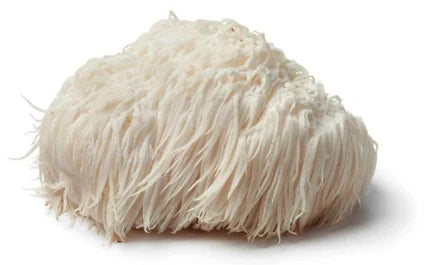
Lion’s Mane (Hericium erinaceus)
Lion's Mane is one of the most researched functional mushrooms, recognised by its distinctive white, cascading fruiting body. The species is found across North America, Europe, and Asia, and has been used in East Asian wellness traditions for centuries.
Fruiting bodies contain hericenones, along with a broad range of beta-glucans and polyphenols. Liquid-grown mycelium separately contains erinacines. In the European Union, mycelium extracts are classified as a novel food, meaning most EU-approved Lion's Mane products use fruiting body extracts exclusively.
A quality Lion's Mane extract should disclose its source material, extraction method, and provide independent batch test results.
The Cloud Test: Mix in hot water — a quality extract turns cloudy or milky as it dissolves. If it floats, clumps, or leaves residue: low quality. Smooth dissolution with a milky haze = genuine fruiting body extract.
ShopLion'ss Mane Capsules · Read the Lion's Mane Quality Guide →

Reishi (Ganoderma lucidum)
Reishi, known in Chinese as Ling Zhi and sometimes called the "mushroom of immortality," is one of the most studied fungi in the world. Ganoderma lucidum has been documented in wellness traditions for over 2,000 years across East Asia.
Its primary bioactive profile centres on triterpenes (ganoderic acids) and high-molecular-weight beta-glucans. These compounds require both water and alcohol extraction to be fully captured — meaning a genuine dual-extracted Reishi will contain the full spectrum. In contrast, a single hot-water extract may lack the triterpene fraction.
Reishi is commonly incorporated into evening routines. It is one of the most studied functional fungi in the peer-reviewed literature.
The Bitterness Test: A quality Reishi extract should taste noticeably bitter. Strong bitterness = high triterpene (ganoderic acid) content. Mild or bland = low potency. Do not mistake sweetness for quality.
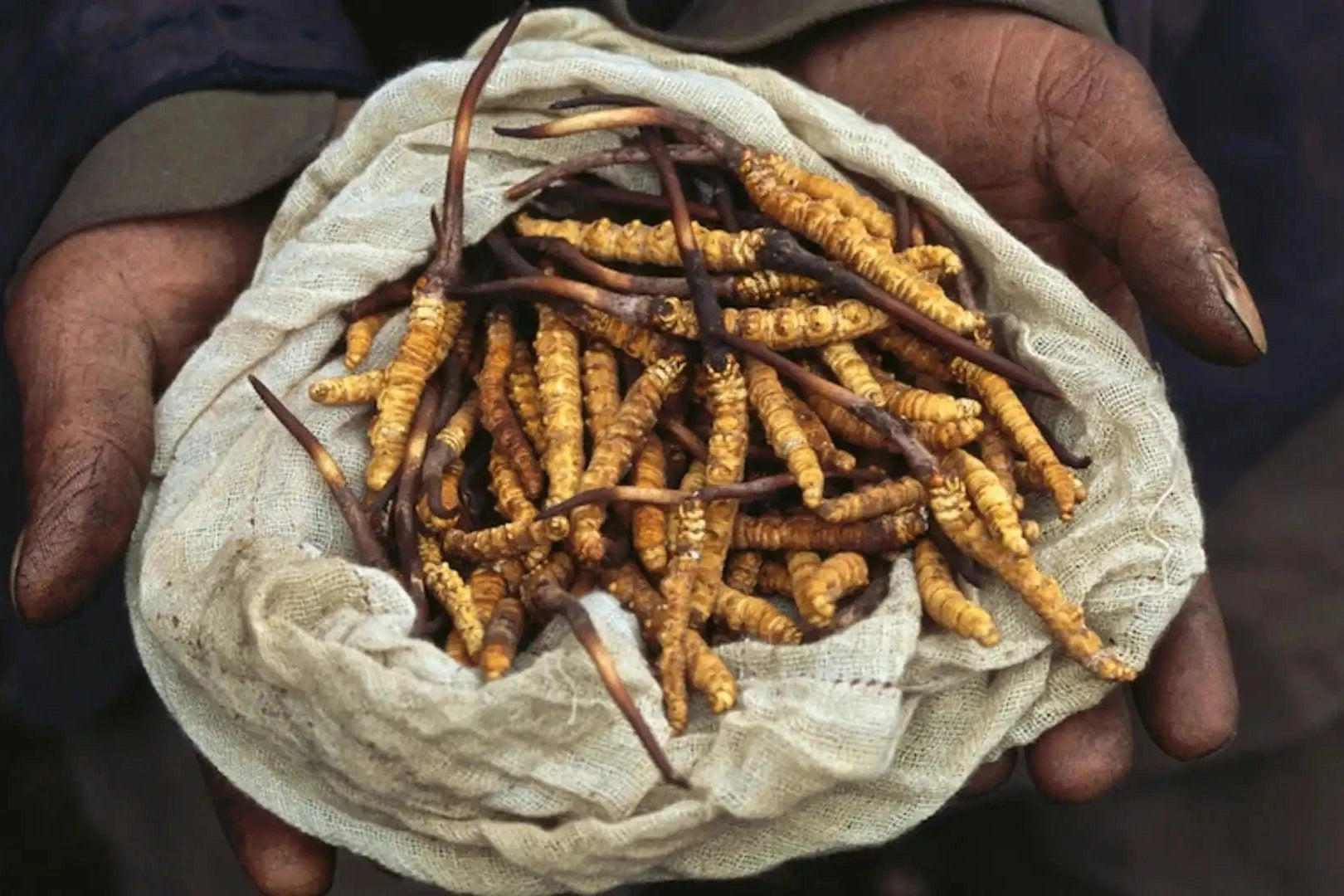
Cordyceps (Cordyceps militaris · CS-4 Strain)
Cordyceps has been used in Tibetan and Chinese traditional practices for centuries, originally harvested from high-altitude caterpillar hosts. Modern supplements use cultivated strains — primarily Cordyceps militaris or the CS-4 liquid culture strain — which are more consistent, sustainable, and accessible than wild-harvested material.
The CS-4 strain, developed over decades of research, is the most-studied cultivated Cordyceps in the scientific literature. It contains a distinct bioactive profile including naturally occurring compounds that have been the subject of extensive peer-reviewed research on physical performance and energy metabolism.
Cordyceps extract is popular among athletes and active individuals. It is frequently combined with Lion's Mane in stack formulations.
The Iodine Starch Test: Add a drop of iodine to your Cordyceps solution. Blue or black = starch contamination from grain-grown mycelium (bad). No colour change = clean extract (good). Take on an empty stomach, 30 minutes before meals. Pair with vitamin C.
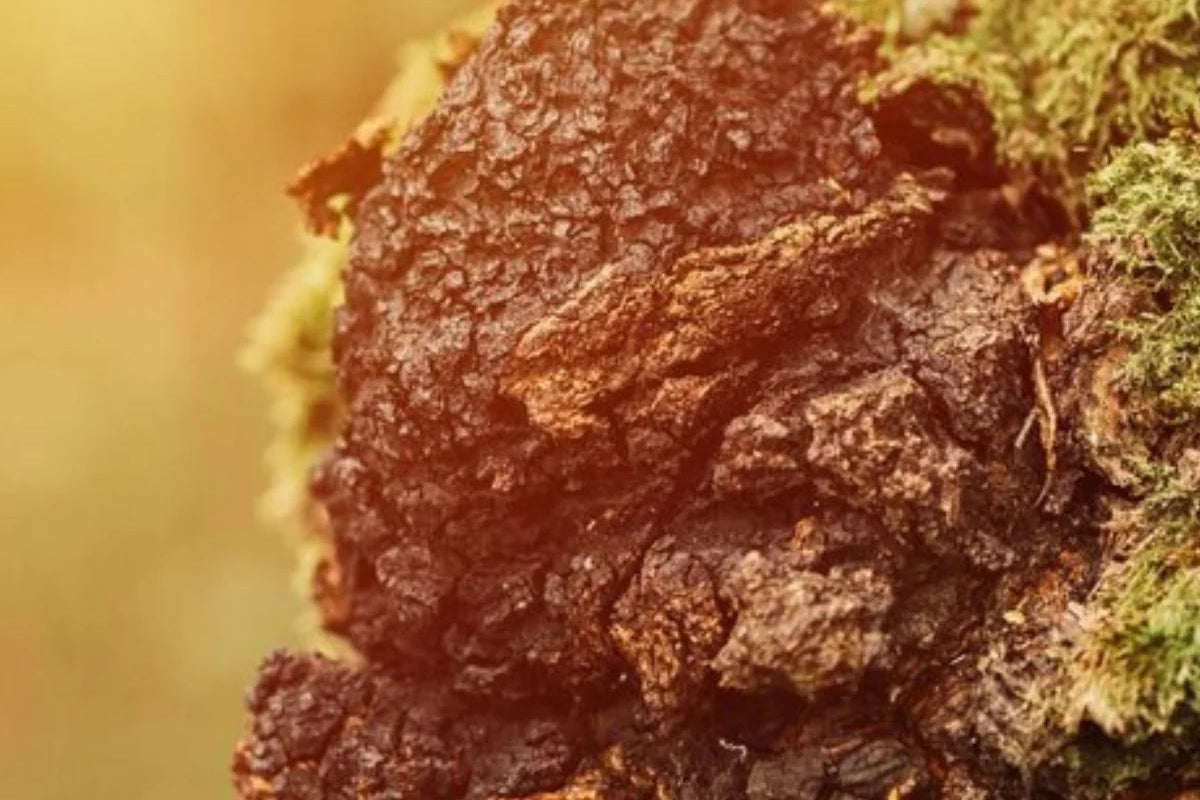
Chaga (Inonotus obliquus)
Chaga is a parasitic fungus that grows on birch trees in northern forests across Siberia, Scandinavia, Canada, and northern Europe. Unlike mushrooms with visible fruiting bodies, Chaga forms a dark, woody conk on the exterior of the tree over many years.
Chaga's bioactive profile is broad: polyphenols (including melanin), betulinic acid derived from the host birch bark, superoxide dismutase (SOD), and polysaccharides. This diversity means Chaga extracts are evaluated differently from mycelium-based mushrooms — betulinic acid content, for example, is specific to Chaga and reflects the quality of the source material.
Wild-harvested Chaga should be sourced from managed forests. Sustainable harvesting leaves enough conk intact to allow regrowth.
The Brew Colour Test: When dissolved in hot water, a quality Chaga extract turns deep amber almost instantly. Pale or slow colour change = low-quality extract. Taste should be earthy with a slight bitterness — never sweet.
The Science
How Do Functional Mushrooms Work?

Bioactive Compounds
Each species contains a distinct set of naturally occurring bioactive compounds — beta-glucans, triterpenes, polyphenols — that are structurally unique to the species and growth conditions.

Functional Properties
Many functional mushrooms are classified as functional mushrooms — substances studied for their potential role in supporting the body’s response to physiological demands. They are not stimulants.

Extraction Matters
Compounds must be made bioavailable through extraction. Hot water extracts water-soluble compounds; alcohol extracts fat-soluble ones. Dual extraction captures both fractions.
Learn About Extraction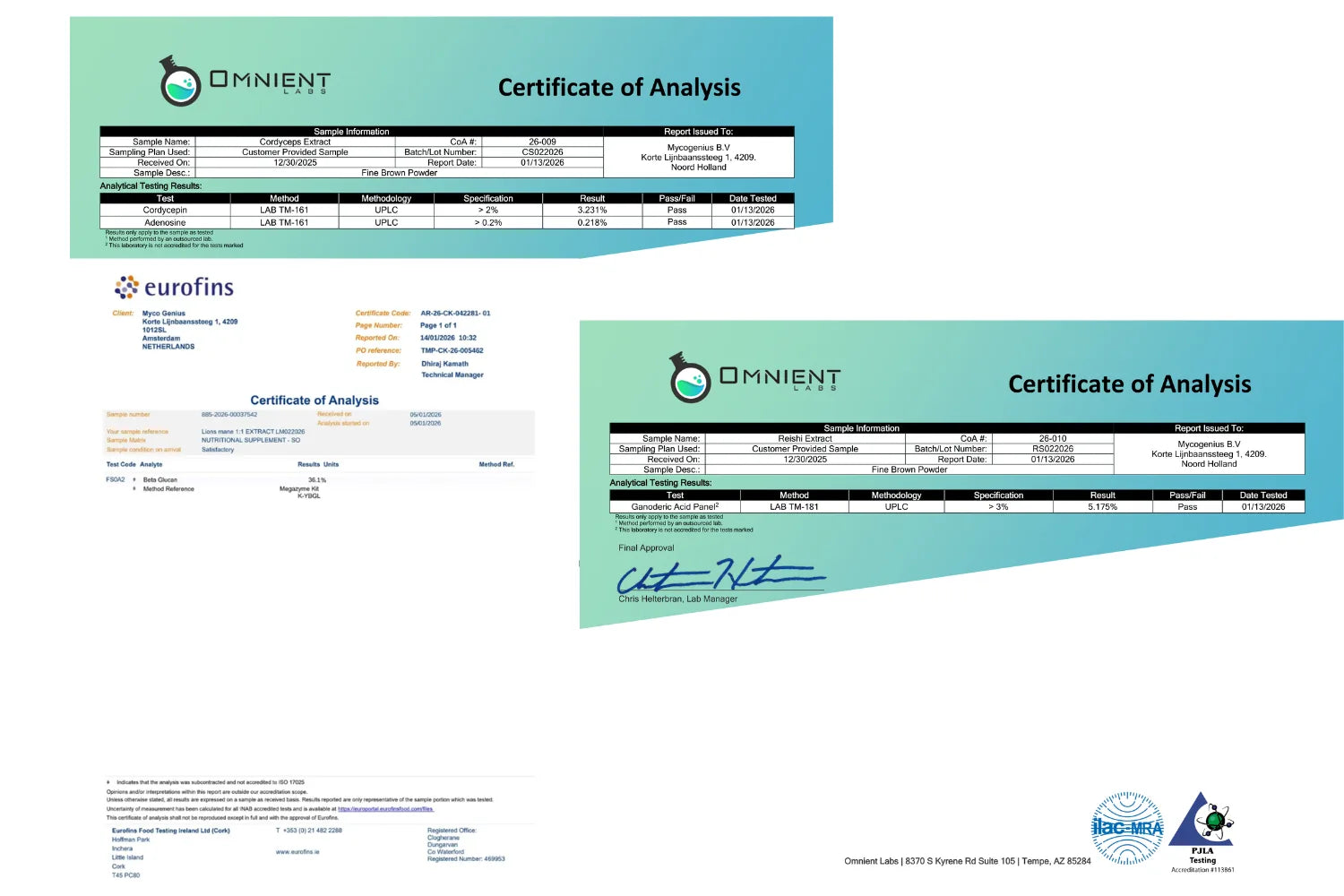
How to Choose a Quality Functional Mushroom Supplement
The quality of a functional mushroom supplement is determined by four factors:
1. Source material. Fruiting body extracts are most aligned with EU regulations and the established research literature. Mycelium-on-grain products contain residual starch substrate that dilutes active compound density.
2. Extraction method. Dual extraction (hot water + alcohol) captures the full compound spectrum. Single-extraction products may miss an entire fraction of bioactives.
3. Third-party testing. Look for ISO 17025-accredited laboratory testing with published Certificates of Analysis. Generic or undated COAs are a red flag.
4. Transparency. A reputable brand discloses source material, extraction method, analytical markers tested, and laboratory identity. If this information is absent, quality cannot be verified.
Common Questions About Functional Mushrooms
Can I take functional mushrooms every day?
Yes. Functional mushrooms are food supplements designed for regular daily use. Most research on their compound profiles is conducted over extended periods rather than single doses. Consistency is generally considered important for evaluating effects.
How long does it take to notice a difference?
There is no universal answer — individual responses vary. Many users report noticing changes after 4 to 8 weeks of consistent use. Functional mushrooms are not stimulants and do not produce immediate acute effects.
Are functional mushrooms legal in Europe?
Yes. Functional mushrooms sold as food supplements are legal throughout the European Union. They are regulated as food rather than medicine. Note that Lion’s Mane mycelium has a novel food classification in the EU — fruiting body extracts do not carry this restriction.
What is the difference between capsules and powder?
The extract is the same — the format is a matter of convenience. Capsules offer pre-measured doses and portability. Powders allow flexible dosing and can be added to drinks, coffee, or food. Both deliver the same extract when produced from the same source material.
What is the best functional mushroom for a beginner?
This depends on individual goals. Lion’s Mane is frequently chosen as a starting point due to the volume of research available on the species. Reishi is common for those focused on stress adaptation. Cordyceps is often selected by physically active individuals. Chaga is typically chosen for its broad compound diversity. Our The Daily Sync combines Lion’s Mane and Cordyceps as an introductory stack.
Are functional mushrooms safe?
Functional mushrooms have a long history of use in traditional wellness practices and an established safety profile in the research literature. They are not classified as pharmaceutical products in the EU. If you are pregnant, breastfeeding, or taking prescription medication, consult a healthcare professional before use.
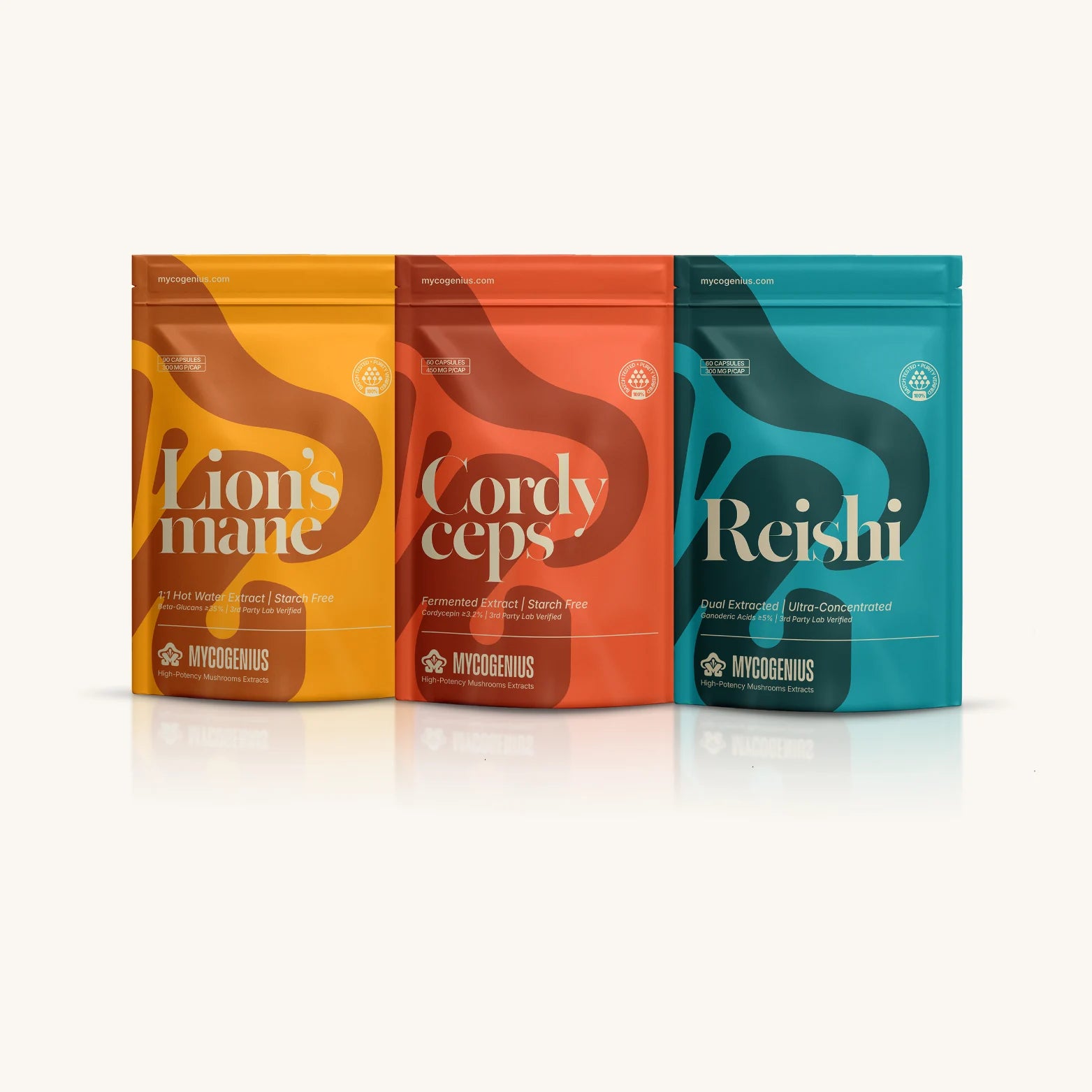
Start With the Full Spectrum
The Full Harvest combines Lion’s Mane, Cordyceps CS-4, and Reishi in a single daily formula — each species independently dual-extracted from 100% organic fruiting bodies, batch-tested by ISO 17025-accredited laboratories.
EU Organic · certified by Organic Trust.
Certified extract producer · FSSC 22000, ISO 22000, ISO 9001.

Packed in the Netherlands · ISO 22000 / FSSC 22000.
Every batch independently tested · ISO/IEC 17025-accredited laboratory