Testing Transparency
Most mushroom supplement brands test for one thing: beta-glucan percentage. We go further. Here’s why that matters, and how we verify that every Mycogenius extract is exactly what the label says it is.
The Problem with Standard Testing
The functional mushroom industry relies heavily on the Megazyme beta-glucan assay as its primary quality benchmark. Brands optimise for it. Consumers shop by it. But recent NMR metabolomic analysis of anonymised market samples revealed a serious problem:
• Products claiming 10–20% filler content were found to contain over 80% filler (maltodextrin, polydextrose, rice flour)
• Polydextrose, a cheap synthetic fibre, is being deliberately added because it inflates beta-glucan readings on standard assays
• Products labelled as “pure extract” showed profiles consistent with mycelium-on-grain, not fruiting body
In other words: a product stuffed with cheap filler can show an impressive beta-glucan percentage on the label, not because it contains more mushroom, but because the filler artificially inflates the result.

Why Beta-Glucans Alone Aren’t Enough
Beta-glucan content is one quality marker, but it’s not the only one. Every mushroom species has its own unique set of bioactive compounds that should be tested for independently:
Lion’s Mane: Hericenones and erinacines — the compounds linked to nerve growth factor (NGF) support
Cordyceps: Cordycepin and adenosine — the compounds behind its energy and endurance benefits
Reishi: Ganoderic acids and triterpenes — responsible for natural balance and stress support
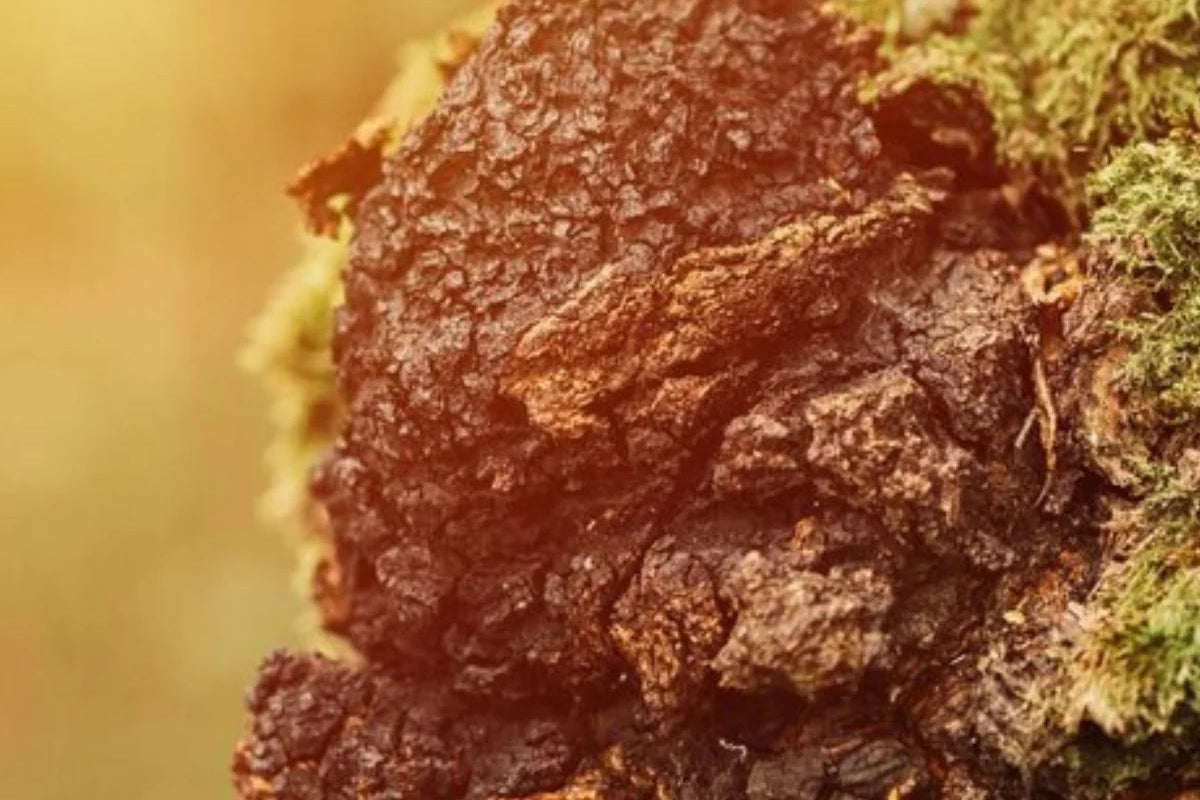
Chaga: Polyphenols and superoxide dismutase (SOD) — the quality markers
If a brand only tests for beta-glucans, you have no way of knowing whether these species-specific compounds are actually present, or present in meaningful amounts.
How Mycogenius Tests
We don’t rely on a single number. Every batch of Mycogenius extract goes through a multi-layered verification process:
1. Species Verification
Before anything else, we confirm the mushroom species is correct. Substitution, whether accidental or deliberate, is more common than most consumers realise. Our testing confirms you’re getting the exact species stated on the label.
2. Beta-Glucan & Bioactive Testing
We test for beta-glucan content alongside the species-specific markers that actually define the mushroom’s function. High beta-glucans with no hericenones in a Lion’s Mane extract? That’s a red flag, not a selling point.
3. Filler & Adulterant Screening
We screen for undisclosed fillers, flow agents, maltodextrin, polydextrose, and starch content. If it’s not supposed to be there, we test for it.
4. Contaminant Testing
Every batch is tested for heavy metals, pesticide residues, and microbial contamination. Clean mushrooms start with clean testing.
5. Independent, ISO 17025-Accredited Labs
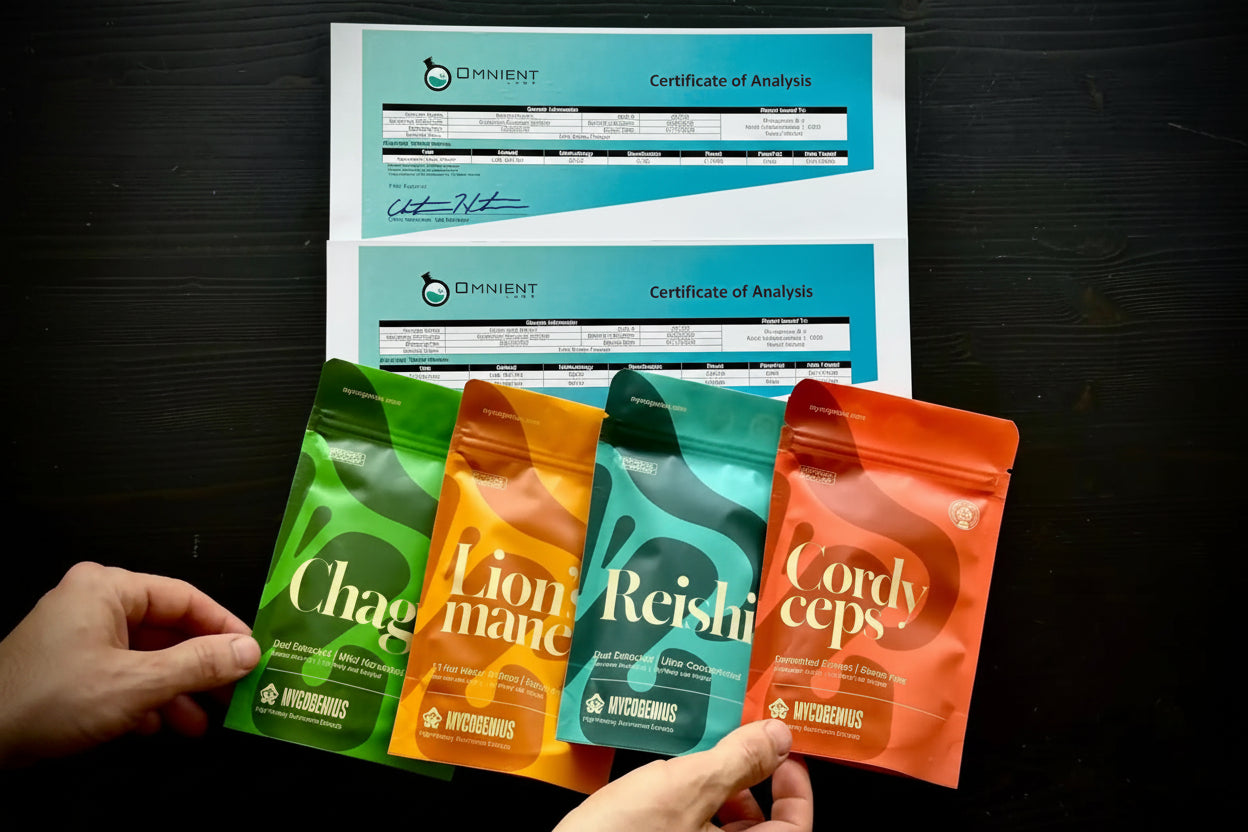
All testing is conducted by independent, ISO 17025-accredited laboratories. We don’t use in-house testing. We don’t put our logo on the Certificate of Analysis. The results come from a reputable third-party lab with no commercial interest in the outcome.
What to Look for When Buying Mushroom Supplements
Whether you choose Mycogenius or another brand, here’s what genuine quality looks like:
Fruiting body extract, not mycelium-on-grain (MOG). MOG products are mostly substrate (oats, rice) with minimal mushroom content. Note: this does not include liquid culture mycelium, which for Lion’s Mane and Cordyceps may offer genuine benefits.
A named, ISO 17025-accredited lab on the COA. Not all labs are equal. Some “dry labs” produce whatever results a brand pays for. If the lab isn’t named and independently accredited, the results are meaningless.
Testing beyond beta-glucans. Each mushroom extract has unique quality markers. A credible brand tests for them and shares the results.
Transparency about what’s NOT in the product. Brands that test for contaminants, fillers, and starch content are doing more than the minimum.
No in-house testing or branded COAs. All testing should be done independently by a reputable lab. A Certificate of Analysis with a company logo is not independent verification.

Our Lab Reports
Every Mycogenius product ships with a QR code on the packaging that links directly to the batch-specific Certificate of Analysis. No hunting for it. No emailing customer service. Scan, read, verify.
You can also access our lab reports directly here:
View All Certificates of Analysis →
If you can’t find the report for your specific batch, reach out to us at info@mycogenius.com and we’ll send it within 24 hours.
Where This Data Comes From
The market sample analysis referenced on this page was conducted by Purity-IQ Labs in Vancouver, Canada, using NMR metabolomic spectroscopy on anonymised market samples of Reishi and Lion’s Mane extracts.
We share this data not to scare anyone, but because we believe transparency is the baseline, not the exception. If more brands tested beyond the standard, the entire industry would improve.
Ready to Try Mushroom Extracts You Can Actually Verify?
Questions about our testing? Reply to any of our emails, DM us on Instagram, or email info@mycogenius.com.
GMP Certified
ISO 9001
HACCP CERTIFIED
ISO IEC 17025