Cordyceps and Mood: What the Research Is Exploring
Overhyped, under-evidenced, and riding a wave of wellness marketing that outpaced the actual science about a decade ago.
The truth, as usual, sits somewhere between the two. There is real research being done on cordyceps and its key compound, cordycepin. Some of it is genuinely interesting. But a lot of what gets repeated online skips over the context that separates "interesting early findings" from "this will change your life."
Here is what the science actually says, what it does not say, and what you should know before you spend money on a product that might not contain any of the compounds being studied in the first place.
What Cordyceps Actually Is (and What Most People Get Wrong)
When people say "cordyceps," they usually picture the parasitic caterpillar fungus from the Himalayas --- Ophiocordyceps sinensis, the one that grows out of ghost moth larvae at high altitude. That species has been used in traditional Chinese and Tibetan practice for centuries. It also costs upwards of $20,000 per kilogram on the wild market. You are not taking it in a supplement.
What you are most likely taking is one of two things: Cordyceps militaris fruiting bodies grown on grain or rice substrates, or CS-4, a strain of Paracordyceps hepiali (historically classified within the Cordyceps sinensis complex) produced through liquid fermentation.
The distinction matters because these are different organisms with different compound profiles, and the research does not apply interchangeably between them.
CS-4 was originally isolated from wild O. sinensis specimens in the 1980s by Chinese researchers and has since been cultivated via liquid fermentation in bioreactors. This is not the same as mycelium-on-grain, where fungal mycelium is grown on a starch substrate and the whole thing --- grain, mycelium, and all --- gets ground up and put in a capsule. Liquid fermentation grows mycelium in a controlled broth environment without a grain substrate, yielding a concentrated mycelium extract rather than diluted biomass.
This is a point worth pausing on. A significant portion of cordyceps products on the market are mycelium-on-grain (MOG). The grain is not removed before processing. It dilutes the active compounds and contributes starch that has no functional relevance. When research papers study cordycepin or adenosine activity, they are not studying grain filler.
Cordycepin and Cellular Energy: The ATP Connection
The compound that gets the most attention in cordyceps mood research is cordycepin (3'-deoxyadenosine). Structurally, it is an analogue of adenosine --- one of the building blocks of adenosine triphosphate, or ATP.
ATP is not some obscure biochemical detail. It is the molecule your cells use as energy currency. Every cellular process that requires energy --- muscle contraction, nerve signalling, neurotransmitter synthesis --- runs on ATP. When ATP availability drops, cellular processes slow down. When it is sufficient, they run as they should.
This is where the cordyceps-energy connection originates. Multiple studies have observed that cordycepin and cordyceps extracts influence ATP metabolism and oxygen utilisation at the cellular level. A 2020 study published in Molecules found that cordycepin activated the AMPK pathway --- a key cellular energy sensor --- in cell models. AMPK activation is associated with improved mitochondrial function and energy homeostasis.
The logic connecting this to mood is not unreasonable, even if it is still speculative. Your brain is the most energy-demanding organ in your body, consuming roughly 20% of your total energy output despite making up about 2% of your body weight. When cellular energy metabolism is compromised, downstream effects can include changes in neurotransmitter production, neural signalling efficiency, and the subjective experience of mental fatigue, fog, or low motivation.
Researchers are exploring whether compounds that influence cellular energy pathways might, by extension, influence how people feel. It is a plausible hypothesis. But "plausible" and "proven" are two different things.
Looking for a quality Cordyceps extract? Organic CS-4, cordycepin standardised, third-party tested.
Shop Cordyceps →What Animal Studies Have Found
The most commonly cited evidence for cordyceps and mood comes from animal models, primarily studies in mice and rats. These studies are worth understanding, but they need to be framed honestly.
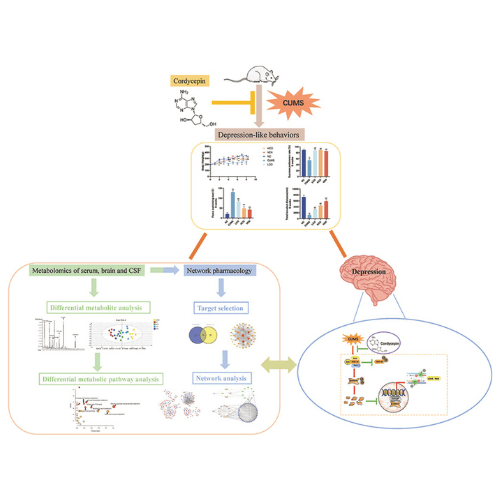
A 2014 study published in Evidence-Based Complementary and Alternative Medicine administered cordyceps extract to mice subjected to forced swim and tail suspension tests—standard behavioural models used in mood-related pharmaceutical research. The researchers observed statistically significant changes in immobility time compared with controls. A 2021 study in Biomedicine & Pharmacotherapy found that cordycepin influenced serotonin and dopamine-related pathways in rodent models.
These results are nothing. They are, however, results in mice. Mouse models are useful for understanding biological mechanisms. They can show that a compound crosses the blood-brain barrier, interacts with a specific receptor, or alters behaviour in a controlled setting. What they cannot do is tell you how a human being will feel after taking a capsule every morning for six weeks.
The gap between animal models and human experience is not a formality. It is enormous. The majority of compounds that show promising results in animal behavioural models do not translate to meaningful effects in human trials. This is true across pharmaceutical research generally, and especially for natural compounds, where dosing, bioavailability, and individual variability add layers of complexity.
As of mid-2026, there are no large-scale, randomised, placebo-controlled human trials specifically examining cordyceps or cordycepin for mood in otherwise healthy adults. There are a small number of human studies looking at exercise performance and fatigue --- some with positive results --- but mood as a primary endpoint remains largely unexplored in human subjects.
This does not mean the research is worthless. It means the research is early. Those are different conclusions, and the distinction matters.
The Energy-Mood Connection: What We Can and Cannot Say
There is a broader conversation in nutritional science about the relationship between cellular energy and subjective Wellbeing. It is not specific to cordyceps, but it provides useful context.
People who report persistent low energy, mental fog, or difficulty concentrating often describe these experiences in terms that overlap with mood. Feeling physically drained and feeling mentally flat are not the same thing, but they frequently coexist, and there is growing interest in whether interventions that influence one might influence the other.
Cordyceps research sits within this overlap. The documented effects on oxygen utilisation and ATP metabolism are relevant to how efficiently your cells produce and use energy. Whether that translates to a noticeable change in how you feel on a day-to-day basis is a question the research has not yet answered with the kind of evidence that would allow anyone to make definitive statements.
You can say: cordycepin is a bioactive compound with documented effects on cellular energy pathways. Animal models suggest interactions with neurotransmitter-related systems. The connection between cellular energy and mental wellbeing is an active area of scientific inquiry. And anyone who tells you more than that is going beyond the available data.
Why Most Cordyceps Products Will Not Deliver
Even if the research eventually confirms meaningful effects in humans, there is a separate and equally important problem: the vast majority of cordyceps products on the market are unlikely to contain the compounds being studied.
This is not cynicism. It is chemistry.
Cordycepin --- the compound driving most of the research interest --- is not guaranteed to be present in every cordyceps product. Its concentration depends on the species used, the cultivation method, the extraction process, and whether the manufacturer actually tests for it.
Here is what you will typically find on the shelf:
Steam-treated powder. Dried cordyceps material (often militaris fruiting bodies or MOG mycelium) exposed to steam for sterilisation and then ground into powder. This is not extraction. Steam treatment is a hygiene step. It does not concentrate cordycepin. It does not break open cell walls in a way that makes bioactives meaningfully accessible. The finished product may contain trace amounts of cordycepin, but not at concentrations comparable to those used in research.
Mycelium-on-grain. Fungal mycelium grown on a grain substrate (rice, oats, sorghum). The grain is not separated from the mycelium before processing the product. The result is a powder that is often 50-70% starch by weight. Whatever cordycepin the mycelium produced is diluted by the substrate it grew on. These products regularly fail to show meaningful cordycepin levels on independent testing.
Hot water only extracts without cordycepin testing. Some products use genuine hot-water extraction but do not specifically test the finished product for cordycepin. They might report beta-glucan content or total polysaccharides, which is useful information, but it tells you nothing about whether cordycepin survived the process or is present at relevant concentrations.
If you are interested in cordyceps specifically because of the research on cordycepin and cellular energy, the product you choose matters as much as the science you read.
What to Look For
Not all cordyceps products are equivalent. If the research on cordycepin is what drew your interest, here is what separates a product that might deliver from one that almost certainly will not.
CS-4 liquid fermentation. CS-4 mycelium produced through liquid fermentation in controlled bioreactors yields a concentrated extract without grain dilution. The extraction process --- hot water first, followed by ethanol precipitation --- is designed to preserve and concentrate key compounds including cordycepin, adenosine, and polysaccharides. This is not the same as MOG or steam-treated powder.
Cordycepin on the Certificate of Analysis. A COA that lists only beta-glucans or total polysaccharides is not enough. Look for cordycepin content listed as a specific percentage, tested by an independent laboratory. If the brand cannot provide this, you have no way of knowing whether the compound driving the research is present in their product.
ISO 17025-accredited third-party testing. ISO 17025 is the international standard for testing and calibration laboratories. It means the lab's methods have been validated and audited. Third-party means the manufacturer did not conduct the testing. This combination is the baseline for trustworthy analytical data. If a brand cannot tell you who tested their product and under what accreditation, the numbers on the label are unsupported claims.
Transparent batch-specific data. The best manufacturers publish COAs for each production batch, not a single test from years ago. Compound concentrations vary between batches. Transparency means showing the data for the product you are actually buying, not a historical best result.
Ready to try Cordyceps?
Organic CS-4 extract. 1.5% cordycepin. Liquid-fermented, no grain substrate. ISO 17025 tested.
Shop CordycepsFrequently Asked Questions
Does cordyceps improve mood?
There is no direct evidence from human trials that cordyceps improves mood. Animal studies have observed behavioural changes in mice exposed to cordyceps extracts and cordycepin, and there is documented activity on cellular energy pathways that some researchers believe may have downstream effects on mental wellbeing. But these findings have not been confirmed in large-scale human trials. The honest answer is that we do not know yet.
What is cordycepin and why does it matter?
Cordycepin (3'-deoxyadenosine) is a naturally occurring compound found in cordyceps species. It is structurally similar to adenosine, a molecule involved in ATP production and energy metabolism. Research has shown it interacts with cellular energy pathways, and some animal studies suggest it influences neurotransmitter-related systems. It is the primary compound of interest in most cordyceps research, which is why its presence (or absence) in a product matters.
Is CS-4 the same as wild cordyceps?
No. CS-4 is a fungal strain originally isolated from wild Ophiocordyceps sinensis that is cultivated through liquid fermentation in bioreactors. Wild cordyceps (O. sinensis) is a parasitic organism that grows on caterpillar larvae at high altitude and is prohibitively expensive. CS-4 is a practical, vegan, scalable alternative that has been the subject of its own body of research since the 1980s. It is not a synthetic imitation—it is a related organism produced under controlled conditions.
How is CS-4 different from mycelium-on-grain cordyceps?
CS-4 is produced by liquid fermentation, meaning the mycelium develops in a nutrient broth rather than on a solid grain substrate. The extract is then processed by hot-water extraction, followed by ethanol precipitation. Mycelium-on-grain (MOG) grows fungal mycelium on rice or oats, and the entire mass --- mycelium and grain together --- is ground into powder. MOG products are typically diluted with starch and exhibit lower concentrations of key compounds such as cordycepin.
What should I look for when buying a cordyceps product?
Look for CS-4 liquid-fermented mycelium extract (not MOG), a Certificate of Analysis that specifically lists cordycepin content, third-party testing from an ISO 17025-accredited laboratory, and batch-specific data rather than a generic or outdated test result. If a brand cannot provide these, you do not have an objective basis for evaluating their product.
Get the Dosage & Timing Cheat Sheet
Exact amounts and best timing for all six species, on one page. Free PDF, straight to your screen.
Something went wrong; please try again.
You'll also get our occasional research-based newsletter. Unsubscribe any time.
Done. Here's your cheat sheet.
We've also emailed you a copy so you can find it later.
Download the PDFMycogenius Cordyceps CS-4 Extract
Organic liquid-fermented CS-4 mycelium. Cordycepin ≥1.5%. Third-party tested, batch COA published.
★★★★★ 4.7 on Trustpilot
Shop Cordyceps