
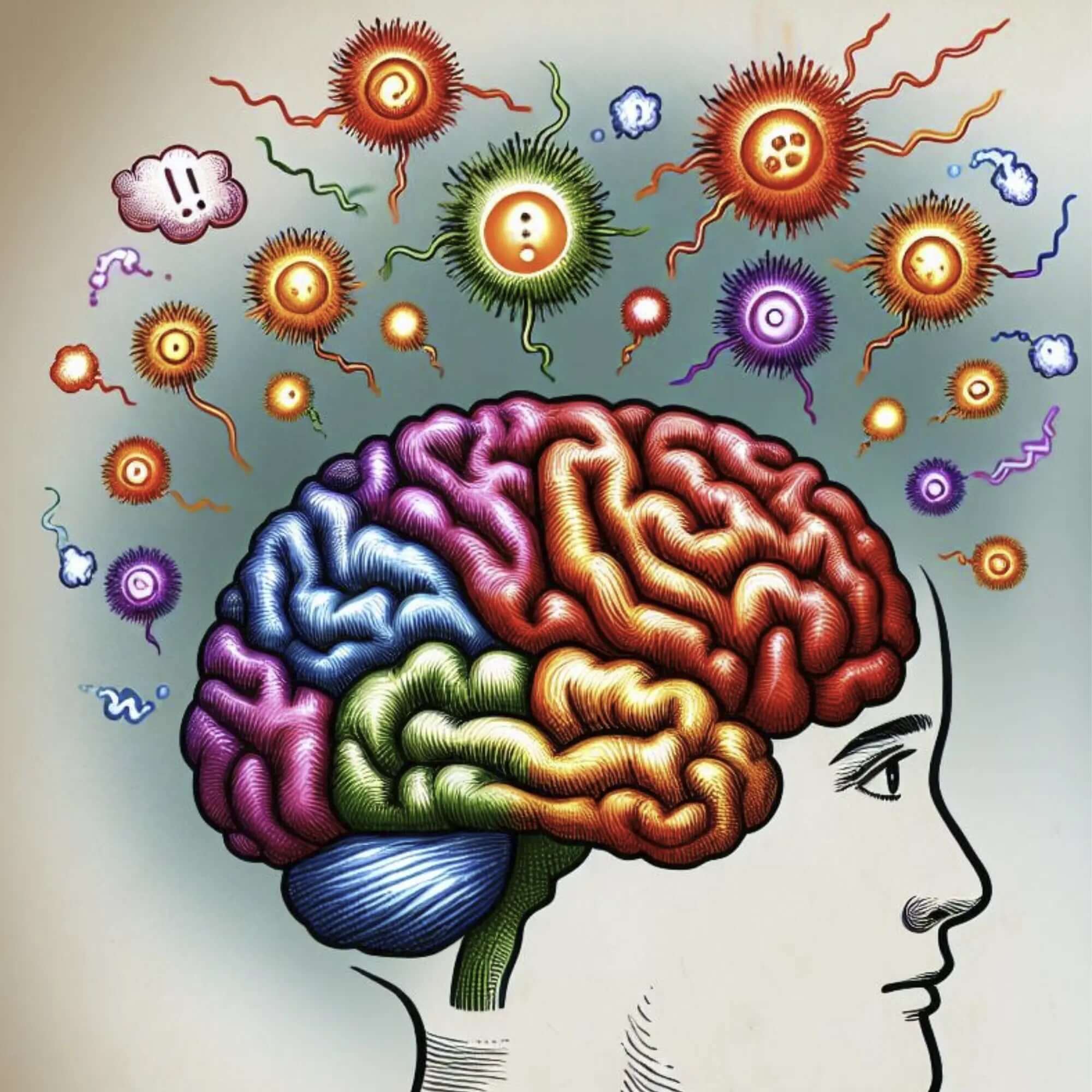
Lion's Mane and ADHD: What the Research Actually Shows
No clinical trial has tested Lion's Mane specifically for ADHD. However, Lion's Mane (Hericium erinaceus) contains hericenones, compounds that stimulate nerve growth factor (NGF) and brain-derived neurotrophic factor (BDNF), both of which play a role in attention, working memory and dopamine signalling. Seven clinical trials (2009 to 2026) show improvements in cognitive performance, processing speed and stress reduction in humans. This article reviews every relevant study, explains the neuroscience, and sets out what is and is not supported by evidence. Lion's Mane is not a replacement for medical treatment. Consult your healthcare provider before making any changes.
If you have ADHD, you have almost certainly searched for alternatives to stimulant medication. Side effects, inconsistent coverage across the day, or simply wanting more options are all common reasons. Lion's Mane mushroom appears repeatedly in those searches, and for understandable reasons: it is one of the few natural compounds with published human trial data on cognitive performance.
The question is whether that data actually applies to ADHD. This article breaks down exactly what we know, what we do not, and where the research is heading.
What Is ADHD, and Why Do People Look Beyond Medication?
ADHD (Attention-Deficit/Hyperactivity Disorder) is a neurodevelopmental condition affecting an estimated 5 to 7 percent of children and 2 to 5 percent of adults worldwide. It presents as persistent difficulties with attention, impulse control, or hyperactivity, and it significantly affects daily functioning.
At a neurological level, ADHD is characterised by differences in dopamine and norepinephrine signalling, particularly in the prefrontal cortex. Standard treatments include stimulant medications (methylphenidate, amphetamines) and behavioural therapy. These are effective for many people, but not everyone responds well. Side effects such as insomnia, appetite loss and mood changes lead a significant number of people to explore complementary approaches.
That is the context in which Lion's Mane enters the conversation.
How Does Lion's Mane Affect the Brain?
Lion's Mane is a culinary and functional mushroom with a long history of use in East Asian traditional medicine. Its relevance to brain research comes down to a handful of bioactive compounds, primarily hericenones found in the fruiting body.
Nerve Growth Factor (NGF)
Hericenones C, D and E were first isolated by Kawagishi et al. in 1994. These compounds stimulate the production of nerve growth factor (NGF), a protein essential for the survival, maintenance and regeneration of neurons. NGF is particularly active in the hippocampus and basal forebrain, regions involved in memory and learning (Kawagishi & Zhuang, 2008).
Brain-Derived Neurotrophic Factor (BDNF)
More recently, Lion's Mane has been shown to increase circulating BDNF levels in humans. Vigna et al. (2019) found elevated pro-BDNF in overweight participants after 8 weeks of supplementation (PMC6500611). Cernelic Bizjak et al. (2024) confirmed BDNF upregulation alongside improved cognitive processing speed in a double-blind RCT (Journal of Functional Foods, 2024).
BDNF is critical here because it is directly involved in dopamine regulation. More on this below.
The NDPIH Discovery (University of Queensland, 2023)
A team led by Martinez-Marmol and Bhatt at the University of Queensland identified new compounds in Lion's Mane, notably NDPIH and hericene A, that promote neurite outgrowth through a pathway (ERK1/2) distinct from but convergent with the BDNF/TrkB pathway. In mice, these compounds enhanced spatial memory formation (Journal of Neurochemistry, 2023).
This is significant because it suggests Lion's Mane may support neuronal growth through multiple independent mechanisms, not just one.
Why BDNF Matters Specifically for ADHD
This is the connection that most articles on Lion's Mane and ADHD miss entirely. There is a separate body of research, unrelated to mushrooms, linking BDNF directly to ADHD.
- Corominas-Roso et al. (2013) found that adults with ADHD had significantly lower serum BDNF levels compared to healthy controls (International Journal of Neuropsychopharmacology).
- Sahin et al. (2014) reviewed the physiology of BDNF and its relationship to ADHD, identifying the BDNF/TrkB pathway as a factor in dopamine vesicle circulation and ADHD pathogenesis (Molecular Neurobiology).
- Bilgic et al. (2022) measured increased serum BDNF and NGF in children with ADHD, levels which normalised after 10 weeks of methylphenidate treatment (Clinical Psychopharmacology and Neuroscience).
To summarise: BDNF plays a role in ADHD neurobiology. Lion's Mane raises BDNF in human trials. No study has yet connected these two observations directly, but the mechanistic rationale is there, and it is exactly what makes ADHD-specific Lion's Mane research worth pursuing.
Has Lion's Mane Been Directly Studied for ADHD?
The honest answer is no. As of July 2026, no completed human clinical trial has tested Lion's Mane specifically in an ADHD population.
However, a published research protocol (URNCST, 2024) describes a rodent model designed specifically to test Lion's Mane on ADHD-related cognitive deficits. This tells us the scientific community recognises the rationale and is actively moving towards ADHD-specific studies.
In the meantime, the relevant evidence comes from seven clinical trials testing Lion's Mane on cognitive performance, attention, working memory, and mood in various human populations.
What Do 7 Clinical Trials Show About Lion's Mane and Cognition?
Here is every published human clinical trial with outcomes relevant to ADHD, in chronological order. Each one is cited with author, sample size, and key finding so you can verify for yourself.
1. Mori et al. (2009) — Mild Cognitive Impairment
Design: Double-blind, placebo-controlled RCT. 30 participants, 16 weeks, 3 g/day dried Lion's Mane tablets.
Result: Significant improvement in cognitive function scores at weeks 8, 12 and 16 versus placebo. Scores declined 4 weeks after cessation.
ADHD relevance: Demonstrates measurable cognitive improvement with sustained use, and decline upon stopping.
PubMed: 18844328
2. Nagano et al. (2010) — Depression and Anxiety
Design: RCT. 30 menopausal women, 4 weeks, 500 mg/day fruiting body in cookies.
Result: Significant reductions in depression and anxiety scores.
ADHD relevance: Anxiety and depression frequently co-occur with ADHD. A compound that may ease these could offer complementary value.
PubMed: 20834180
3. Vigna et al. (2019) — BDNF and Mood
Design: Open-label pilot. 77 overweight participants, 8 weeks, 500 mg capsules (80:20 mycelium to fruiting body).
Result: Improved mood and sleep, plus increased circulating pro-BDNF levels.
ADHD relevance: This is the first human evidence that Lion's Mane raises BDNF, the neurotrophic factor implicated in ADHD neurobiology.
PMC6500611
4. Docherty et al. (2023) — Processing Speed and Stress
Design: Double-blind, parallel RCT. 41 healthy adults, 28 days, 1.8 g/day.
Result: Improved Stroop task performance within 60 minutes of a single dose (acute effect). Reduced subjective stress over 28 days.
ADHD relevance: The Stroop test measures executive function and inhibitory control, both core ADHD deficits. This is the most directly relevant study to attention difficulties.
Nutrients, 2023
5. Cernelic Bizjak et al. (2024) — Cognitive Speed and BDNF
Design: Double-blind RCT. 33 participants, 8 weeks, erinacine A-enriched extract.
Result: Increased speed of basic cognitive operations and measurable effects on circulating BDNF levels.
ADHD relevance: Processing speed deficits are common in ADHD. This trial also confirms BDNF upregulation in a controlled setting.
Journal of Functional Foods, 2024
6. Surendran et al. (2025) — Acute Effects in Young Adults
Design: Double-blind, crossover RCT. 18 healthy young adults, single acute dose of 3 g (10:1 extract).
Result: No significant acute improvement in global cognitive function.
ADHD relevance: Important negative finding. A single dose did not produce measurable effects, suggesting consistent daily use over weeks is likely necessary.
Frontiers in Nutrition, 2025
7. Daoust et al. (2026, preprint) — Visual Attention and Working Memory
Design: Double-blind RCT. 109 participants (57 Lion's Mane, 52 placebo), 8 weeks, 2 g/day (fruiting body + mycelial biomass).
Result: Significantly greater improvement in visual attention and working memory (Juggle Factor task, p=0.001). Improved sleep quality, morning restedness and mood. No adverse events.
ADHD relevance: This is the largest Lion's Mane cognitive trial to date, and it directly measures working memory and sustained attention, both core ADHD domains.
medRxiv preprint, 2026
What Can We Actually Conclude?
Taking all seven trials together:
- Six of seven trials showed positive cognitive or mood-related outcomes
- The one negative result (Surendran 2025) tested a single acute dose, not sustained use
- Every trial using 4 or more weeks of daily supplementation found measurable improvements
- Outcomes relevant to ADHD, specifically attention, working memory, processing speed and stress, appear across multiple independent studies
The limitation is clear: none of these trials recruited ADHD participants specifically. The evidence is indirect. But it is also more substantial than most natural compound claims, which rarely have seven human trials to draw from.
Fruiting Body vs Mycelium: Which Compounds Matter?
Lion's Mane contains different bioactive compounds depending on which part of the mushroom is used:
- Fruiting body (the visible mushroom): contains hericenones, the compounds that have been studied for their relationship with NGF. This is what you buy as a traditional extract.
- Mycelium (the root-like network): contains erinacines, a separate class of compounds also studied for their relationship with NGF, though via different pathways.
Many supplements on the market use mycelium grown on grain (often called MOG), which dilutes the mycelial compounds with starch filler. This is why extraction method and third-party testing matter.
The clinical trials above used a mix: Mori (2009) used dried fruiting body, Cernelic Bizjak (2024) used erinacine A-enriched mycelium, and Daoust (2026) used a combination. There is no consensus on which is "better" for cognitive outcomes, but the evidence suggests that genuine extracts with verified bioactive content, whether fruiting body or mycelium, are what matters.
Mycogenius Lion's Mane capsules use 100% organic fruiting body, dual-extracted (ethanol first for hericenones, then hot water for beta-glucans), with batch-specific COAs published for every product. If you are interested in understanding what separates a genuine extract from a grain-diluted powder, our Lion's Mane buying guide covers it in detail.
How Much Lion's Mane Should You Take?
Dosages across the seven clinical trials ranged from 500 mg to 3 g per day. The most consistent positive results came from:
- 500 mg to 2 g per day of standardised extract
- Duration of 4 to 16 weeks (no trial under 4 weeks produced strong cognitive results)
- Consistent daily use, not occasional or as-needed dosing
The Surendran (2025) negative finding reinforces that a single dose is unlikely to produce noticeable effects. If you are considering Lion's Mane, plan on a minimum of 4 to 8 weeks of daily use before evaluating.
For a detailed breakdown of timing and dosing strategies, see our Lion's Mane dosage guide.
Is Lion's Mane Safe? Side Effects and Interactions
Lion's Mane has a strong safety profile across all published trials. The Daoust (2026) trial, with 109 participants, reported zero adverse events.
Known considerations:
- Allergies: Rare, but people with mushroom allergies should avoid Lion's Mane.
- Digestive sensitivity: Occasionally reported at higher doses. Typically resolves with dose adjustment.
- Medication interactions: Limited research exists on interactions with ADHD medications (methylphenidate, amphetamines) or anticoagulants. If you take any medication, consult your healthcare provider before adding Lion's Mane to your routine.
- Autoimmune conditions: Because of its effects on immune-related pathways, caution is advised for those with autoimmune conditions.
Can Lion's Mane Replace ADHD Medication?
No. Lion's Mane is not a treatment for ADHD, and it should not replace any prescribed medication or therapy. ADHD is a clinical diagnosis that benefits from evidence-based medical management.
What Lion's Mane may offer is a complementary approach, something you use alongside (not instead of) your existing treatment plan. If you are considering this, discuss it with your doctor or prescriber. They can advise on timing, potential interactions, and what to monitor.
The Bottom Line
The relationship between Lion's Mane and ADHD is promising but incomplete. There is no direct evidence that it helps ADHD specifically. There is strong indirect evidence from seven clinical trials showing improvements in attention, working memory, processing speed and stress, combined with a mechanistic rationale through BDNF and NGF pathways that are directly implicated in ADHD neurobiology.
The research is moving in the right direction. In the meantime, if you are considering Lion's Mane, look for a genuine extract with verified bioactive content, plan on at least 4 to 8 weeks of consistent use, and keep your healthcare provider in the loop.
Mycogenius Lion's Mane
Organic fruiting body extract. Over 40% beta-glucans. Hericenones verified. Third-party tested, batch-specific COA published.
Shop Lion's Mane Capsules | Shop Lion's Mane PowderFrequently Asked Questions
Does Lion's Mane help with ADHD?
There is no clinical trial testing Lion's Mane specifically for ADHD. However, seven published human trials show improvements in attention, working memory, processing speed and stress reduction. Lion's Mane also raises BDNF levels, a neurotrophic factor implicated in ADHD neurobiology. The evidence is indirect but substantial.
How long does Lion's Mane take to work for concentration?
Based on clinical trial data, most positive cognitive outcomes appeared after 4 to 8 weeks of daily use. One study (Docherty et al., 2023) found acute improvements in executive function within 60 minutes, but sustained benefits require consistent supplementation over several weeks.
Can you take Lion's Mane with Adderall or Ritalin?
There is limited published research on interactions between Lion's Mane and ADHD medications such as methylphenidate (Ritalin) or amphetamines (Adderall). Because Lion's Mane may influence dopamine-related pathways, consult your prescriber before combining them.
What is the best Lion's Mane dosage for ADHD?
Clinical trials used dosages ranging from 500 mg to 3 g per day. The most consistent positive results came from 500 mg to 2 g of standardised extract taken daily for at least 4 weeks. Start at the lower end and adjust based on your response.
Is Lion's Mane safe for children with ADHD?
Published clinical trials have been conducted in adults, not children. While Lion's Mane has a good safety profile in adult studies, there is insufficient data to recommend it for children. Consult a paediatrician before giving any supplement to a child.
Does Lion's Mane increase dopamine?
A preclinical study showed Lion's Mane restored depleted dopamine and noradrenaline levels in stressed animals. It also raises BDNF, which is involved in dopamine vesicle regulation. These findings are preliminary, and no human trial has directly measured dopamine changes from Lion's Mane supplementation.
References
- Kawagishi, H. & Zhuang, C. (2008). Compounds for dementia from Hericium erinaceum. Drugs of the Future, 33(2), 149-155. PubMed
- Mori, K. et al. (2009). Improving effects of the mushroom Yamabushitake on mild cognitive impairment. Phytotherapy Research, 23(3), 367-372. PubMed: 18844328
- Nagano, M. et al. (2010). Reduction of depression and anxiety by 4 weeks Hericium erinaceus intake. Biomedical Research, 31(4), 231-237. PubMed: 20834180
- Corominas-Roso, M. et al. (2013). Decreased serum levels of brain-derived neurotrophic factor in adults with ADHD. International Journal of Neuropsychopharmacology, 16(6), 1267-1275. Oxford Academic
- Sahin, S. et al. (2014). The physiology of BDNF and its relationship with ADHD. Molecular Neurobiology, 50(2), 561-569. Springer
- Vigna, L. et al. (2019). Hericium erinaceus improves mood and sleep disorders in patients affected by overweight. Evidence-Based Complementary and Alternative Medicine. PMC6500611
- Bilgic, A. et al. (2022). Serum BDNF, NGF, GDNF, and galanin levels in children with ADHD. Clinical Psychopharmacology and Neuroscience, 20(4), 693-703. PMC9606423
- Docherty, S. et al. (2023). The acute and chronic effects of Lion's Mane mushroom supplementation on cognitive function, stress and mood. Nutrients, 15(22), 4842. MDPI
- Martinez-Marmol, R. et al. (2023). Hericerin derivatives activate a pan-neurotrophic pathway in central hippocampal neurons. Journal of Neurochemistry, 166(3), 524-544. Wiley
- Cernelic Bizjak, M. et al. (2024). Effects of erinacine A-enriched Hericium erinaceus on cognitive function and BDNF. Journal of Functional Foods, 115, 106128. ScienceDirect
- Surendran, S. et al. (2025). Acute effects of Hericium erinaceus on cognitive function in younger adults. Frontiers in Nutrition, 12, 1405796. Frontiers
- Daoust, J. et al. (2026). Lion's Mane supplementation for cognitive performance: A double-blind RCT. medRxiv (preprint). medRxiv
This article is for educational purposes only. It is not medical advice and does not claim to diagnose, treat, cure, or prevent any disease or condition. Always consult a qualified healthcare professional before starting any supplement.
Get the Dosage & Timing Cheat Sheet
Exact amounts and best timing for all six species, on one page. Free PDF, straight to your screen.
Something went wrong; please try again.
You'll also get our occasional research-based newsletter. Unsubscribe any time.
Done. Here's your cheat sheet.
We've also emailed you a copy so you can find it later.
Download the PDFMycogenius Lion's Mane Extract
Organic fruiting body extract. Beta-glucans ≥35%. Third-party tested, batch COA published.
★★★★★ 4.7 on Trustpilot
Shop Lion's Mane




%20contains%20hericenones,%20compounds%20that%20stimulate%20nerve%20growth%20factor%20(NGF)%20and%20brain-derived...)