
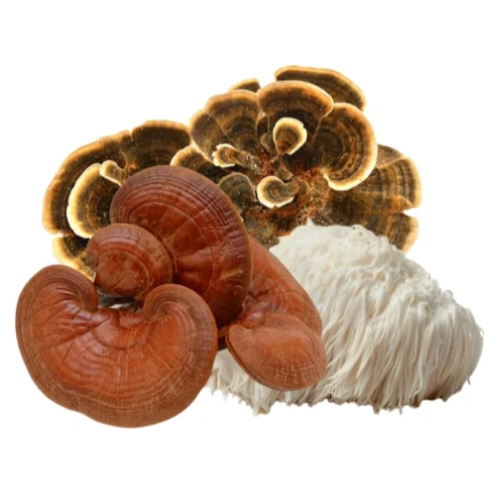
Best Mushroom Supplements: How to Choose the Right One (2026 Guide)
The best mushroom supplement is one made from fruiting-body extracts (not mycelium-on-grain), dual-extracted, and independently tested for specific bioactive compounds such as beta-glucans and triterpenes. That immediately narrows the field. Most products on the market fail at least one of these criteria, and many fail all three.
The mushroom supplement market has grown rapidly, and with it, the gap between marketing claims and actual product quality has widened. Brands advertise "full spectrum," "maximum strength," and "10x concentrated" without disclosing what is actually in the bottle, how it was grown, or whether it was even tested.
This guide is not a "top 10" listicle. It is a framework for evaluating any mushroom supplement, whether it is a single-species extract or a multi-mushroom complex. Once you know what to look for, you can assess any product yourself.
Five Questions That Separate Quality from Marketing
Before you buy any mushroom supplement, ask these five questions. If the brand cannot answer all of them clearly, that tells you something.
1. Is It Made from Fruiting Body or Mycelium-on-Grain?
This is the most important distinction in the entire mushroom supplement market, and it is the one most often obscured.
- Fruiting body extract: Made from the actual mushroom (the visible part that grows above the substrate). Contains the highest concentration of species-specific bioactive compounds, including beta-glucans, triterpenes (in Reishi), hericenones (in Lion's Mane), and cordycepin (in Cordyceps militaris).
- Mycelium-on-grain (MOG): The mycelium (root-like network) is grown on sterilised grain (usually rice or oats). The entire substrate, including the grain, is then dried and ground into powder. The resulting product is a mixture of mycelium and starch. Independent testing has found some MOG products contain 50% or more grain starch by weight.
Check the Supplement Facts panel. If it lists "mycelium," "myceliated grain," or "mycelial biomass," the product is MOG. If it says "fruiting body" or "fruiting body extract," you are getting the actual mushroom.
One exception: Cordyceps sinensis CS-4 is a legitimate mycelium product grown via liquid fermentation (submerged culture), not on grain. CS-4 has a substantial body of research and does not contain grain starch. Not all mycelium products are equal. The distinction is grain-based vs liquid-fermented.
2. Was It Extracted, or Is It Just Dried Powder?
Mushroom cell walls are made of chitin, a tough structural polymer that the human digestive system cannot efficiently break down. Without extraction, the bioactive compounds are locked inside these cell walls and pass through largely unabsorbed.
- Hot water extraction releases beta-glucans, polysaccharides, and some water-soluble triterpenes.
- Ethanol extraction releases triterpenes (particularly ganoderic acids in Reishi), sterols, and other alcohol-soluble compounds.
- Dual extraction (hot water + ethanol) captures both categories. This is the most complete method and is particularly important for Reishi and Chaga.
If a product is labelled as "mushroom powder" without specifying the extraction method, it is likely raw, dried mushrooms ground into powder. This has significantly lower bioavailability than an extract.
3. What Compounds Are Verified by Third-Party Testing?
A quality mushroom supplement should tell you exactly what bioactive compounds it contains, verified by an independent laboratory. The key markers:
| Compound | What It Tells You | Which Species |
|---|---|---|
| Beta-glucans (%) | Primary bioactive polysaccharides. Should be tested with a beta-glucan-specific assay (e.g., Megazyme), not a generic polysaccharide test. | All species |
| Triterpenes / Ganoderic acids (%) | Unique to Ganoderma species. Responsible for Reishi's bitterness. | Reishi, Chaga |
| Hericenones / Erinacines | Compounds unique to Lion's Mane. Hericenones in fruiting body, erinacines in mycelium. | Lion's Mane |
| Cordycepin / Adenosine | Key nucleosides in Cordyceps. Cordycepin is abundant in C. militaris fruiting bodies and CS-4 mycelium. | Cordyceps |
Red flag: Products that report "polysaccharide" percentages without specifying beta-glucans. Standard polysaccharide tests measure all sugar-based molecules, including grain starch and fillers. NMR metabolomic analysis has revealed that some products advertised as high in polysaccharide content are actually padded with polydextrose, a synthetic fibre that inflates test results.
4. Who Tested It, and Can You See the Results?
Third-party testing means the product was sent to an independent laboratory (one not owned or controlled by the brand) for analysis. Look for:
- ISO 17025 accreditation for the testing laboratory. This is the international standard for testing and calibration laboratories.
- Published Certificates of Analysis (COAs). Any brand that claims third-party testing but will not show you the actual lab reports should be questioned.
- Batch-specific results, not generic or outdated reports. A COA from 2 years ago does not verify what is in the bottle you are buying today.
If a brand advertises "lab tested" or "third-party verified" but does not publish the reports, the claim is unverifiable.
5. Is It a Single Species or a Blend? Does It Matter?
Both single-species extracts and multi-mushroom complexes can be high quality. The question is whether the blend is well formulated or merely diluted.
- Single-species extracts give you a higher dose of one specific mushroom. Best if you want to target a particular mushroom's compound profile (e.g., ganoderic acids from Reishi, hericenones from Lion's Mane).
- Multi-mushroom complexes offer a broader range of compounds at lower individual doses. Quality complexes use extracted ingredients and disclose the amount of each species per serving.
Red flag: Blends that list a combined weight (e.g., "2,000mg proprietary blend") without disclosing how much of each species is included. A 6-species blend at 2,000mg total could contain as little as 100mg of each species after accounting for fillers, which is well below any meaningful dose.
What to Avoid: Common Mushroom Supplement Red Flags
- "Full spectrum" with no definition. This term has no regulated meaning in the supplement industry. Some brands use it to describe a product that contains both the fruiting body and mycelium. Others use it to describe a multi-species blend. Without specifics, it reads like marketing language rather than a quality indicator.
- Extraction ratios (10:1, 15:1, 20:1) without verified compound data. A 10:1 ratio means 10kg of raw mushroom was used to produce 1kg of extract. But ratio alone does not tell you what compounds are present or at what concentration. A poorly executed 20:1 extract can contain fewer bioactives than a well-executed 1:1 water extract.
- "Contains 1,000mg of mushroom powder" with no extraction mentioned. Raw powder ≠ extract. Without extraction, chitin cell walls significantly limit bioavailability.
- Artificially high polysaccharide claims. As mentioned above, generic polysaccharide testing can be inflated by starch, fillers, and polydextrose. Beta-glucan-specific testing is the more meaningful metric.
- No growing method or substrate information. If a brand does not tell you how their mushroom was grown or what it was grown on, there is usually a reason.
- Celebrity endorsements or influencer marketing with no scientific substance. Quality mushroom supplements are sold on data, not fame. If the primary selling point is who recommends it rather than what is in it, look elsewhere.
We make these extracts. Organic, species-specific markers verified, full COAs published.
Shop All Extracts →Quick Guide: Key Species and What to Look For
| Species | Key Compounds | What to Check |
|---|---|---|
| Lion's Mane (Hericium erinaceus) | Hericenones, erinacines, beta-glucans | Fruiting body extract. Dual-extracted. Look for hericenone or diterpene content on COA. |
| Reishi (Ganoderma lucidum) | Ganoderic acids, triterpenes, beta-glucans | Log-grown (Duanwood). Dual-extracted. Should taste bitter—triterpene % on COA. |
| Cordyceps (C. militaris or CS-4) | Cordycepin, adenosine, beta-glucans | Know whether it is a militaris fruiting body or CS-4 mycelium. Both are legitimate but different. Look for cordycepin content. |
| Chaga (Inonotus obliquus) | Betulinic acid, beta-glucans, melanin | Wild-harvested from birch trees (not cultivated). Dual-extracted. Betulinic acid content is a key quality marker. |
| Turkey Tail (Trametes versicolor) | PSK (polysaccharide-K), PSP, beta-glucans | Fruiting body extract. Hot water extraction is sufficient. High beta-glucan content (30%+). |
| Maitake (Grifola frondosa) | D-fraction, beta-glucans | Fruiting body extract. The D-fraction is the most researched compound—via hot-water extraction. |
Mushroom Supplement Capsules vs Powder: Which Is Better?
If the extract quality is identical, both formats deliver the same bioactive compounds. The choice is about lifestyle preference:
- Capsules: Pre-measured, no taste, convenient for travel and daily routines. Slightly higher cost per serving due to capsule manufacturing.
- Powder: Flexible dosing, can be added to tea, coffee, smoothies, or food. Lets you taste the product (useful for Reishi, where bitterness indicates triterpene content). Lower cost per serving.
Neither format is inherently superior. What matters is the quality of the extract inside, not the delivery method.
Mycogenius: What We Do Differently
Every Mycogenius extract is made from 100% organic fruiting bodies (except our Cordyceps CS-4, which is liquid-fermented mycelium, not grain-based). Dual-extracted using hot water and ethanol. Third-party tested at an ISO 17025-accredited laboratory. We publish our Certificates of Analysis directly on our website because we believe you should be able to verify what you are buying.
Browse All Extracts | Read About Our Testing
Looking specifically at Cordyceps? Our dedicated Cordyceps supplement guide covers species, extraction methods, and quality markers in detail.
Ready to try our extracts?
Organic mushroom extracts. Species-specific quality markers verified. ISO 17025 third-party tested.
Shop All ExtractsFrequently Asked Questions
What is the best mushroom supplement?
The best mushroom supplement is made from fruiting body extracts (not mycelium-on-grain), dual-extracted with hot water and ethanol, and independently tested for specific compounds such as beta-glucans and triterpenes at an ISO 17025-accredited laboratory. The brand should publish its Certificates of Analysis publicly. These criteria apply equally to single-species extracts and multi-mushroom complexes.
What should I look for in a mushroom supplement brand?
Five things: (1) Fruiting body source, not mycelium-on-grain. (2) Proper extraction method stated (hot water and/or ethanol, not just raw powder). (3) Specific compound data (beta-glucans, triterpenes) verified by third-party testing. (4) Published lab reports from an ISO 17025-accredited lab. (5) Transparent growing and sourcing information. If a brand cannot provide all five, proceed with caution.
Is a mushroom complex supplement better than a single species?
Neither is inherently better. Single-species extracts give you a higher dose of one mushroom's specific compounds. Multi-mushroom complexes offer a broader range at lower individual doses. The quality of the extract matters more than the format. Check that a blend discloses how much of each species is included per serving, not just a combined proprietary blend weight.
Why do some mushroom supplements use mycelium instead of fruiting body?
Cost and speed. Mycelium-on-grain can be produced in weeks rather than months. The mycelium colonises sterilised grain in a bag, and the entire substrate (mycelium + grain) is dried and ground into powder. This is significantly cheaper to produce than growing, harvesting, drying, and extracting actual fruiting bodies. The trade-off is that MOG products contain substantial amounts of grain starch and lower concentrations of species-specific bioactive compounds.
What is polydextrose and why does it matter for mushroom supplements?
Polydextrose is a synthetic soluble fibre found in some mushroom supplements. It inflates polysaccharide test results, making products appear to contain more bioactive polysaccharides than they actually do. NMR metabolomic testing can detect polydextrose, but standard polysaccharide assays cannot distinguish it from real beta-glucans. This is why beta-glucan-specific testing and third-party verification matter.
Are mushroom supplements worth taking?
Functional mushrooms like Reishi, Lion's Mane, Cordyceps, and Chaga have been consumed for centuries and are the subject of ongoing scientific research. However, the quality of the supplement determines what you are actually consuming. A high-quality, dual-extracted, third-party-tested fruiting body extract is a very different product from ground-up grain with mycelium. Whether the investment is worthwhile depends on choosing a product that actually contains verified bioactive compounds.
Get the Dosage & Timing Cheat Sheet
Exact amounts and best timing for all six species, on one page. Free PDF, straight to your screen.
Something went wrong; please try again.
You'll also get our occasional research-based newsletter. Unsubscribe any time.
Done. Here's your cheat sheet.
We've also emailed you a copy so you can find it later.
Download the PDFMycogenius Organic Mushroom Extracts
Species-specific potency verified. Third-party tested in ISO 17025 labs. Batch COAs published.
★★★★★ 4.7 on Trustpilot
Shop All Extracts


,%20dual-extracted,%20and%20independently%20tested%20for%20specific%20bioactive%20compounds%20such%20as%20beta-glucans%20and%20trit...)