Best Reishi Mushroom Supplement: A Buyer's Guide
The best Reishi mushroom supplement is one made from log-grown fruiting bodies, dual-extracted, and independently tested for ganoderic acid content. That rules out the majority of products on the market, which are either grown in sawdust bags within weeks, never tested for the compounds that actually matter, or made from mycelium on grain rather than the fruiting body itself.
Reishi (Ganoderma lucidum) is one of the most widely consumed functional mushrooms in the world, with a documented history spanning over 2,000 years in East Asian medicine. But the modern supplement market has turned "Reishi" into a near-meaningless label. The difference between a premium Reishi extract and a cheap one is not just price. It is growing time, substrate, extraction method, and what compounds are actually verified in the final product.
This guide explains what to look for, what to avoid, and why growing conditions matter more than most people realise.
Why Growing Method Matters More Than Anything Else
This is the single most important factor in Reishi quality, and it is rarely discussed in supplement marketing. Here is the reality:
| Log-Grown (Duanwood) | Bag-Grown (Sawdust Substrate) | Mycelium-on-Grain (MOG) | |
|---|---|---|---|
| Growing time | 9 months on hardwood logs | 2 to 4 months in polypropylene bags | Weeks (mycelium colonises grain, never forms a fruiting body) |
| What you get | Dense, mature fruiting body with thick flesh | Thinner fruiting body, faster turnaround | Ground-up grain with mycelium running through it |
| Triterpene content | Highest. Longer growing time allows greater triterpene accumulation | Moderate. Faster growth means less time for compound development | Very low. Mycelium produces far fewer triterpenes than fruiting bodies |
| Beta-glucan content | High (from fungal cell walls) | Moderate to high | Often inflated by grain starch registering in polysaccharide tests |
| Cost to produce | Highest (time, space, labour) | Moderate | Lowest |
| Industry term | Duanwood Reishi (Chinese: "short wood" method) | Indoor/bag cultivation | MOG, biomass, myceliated grain |
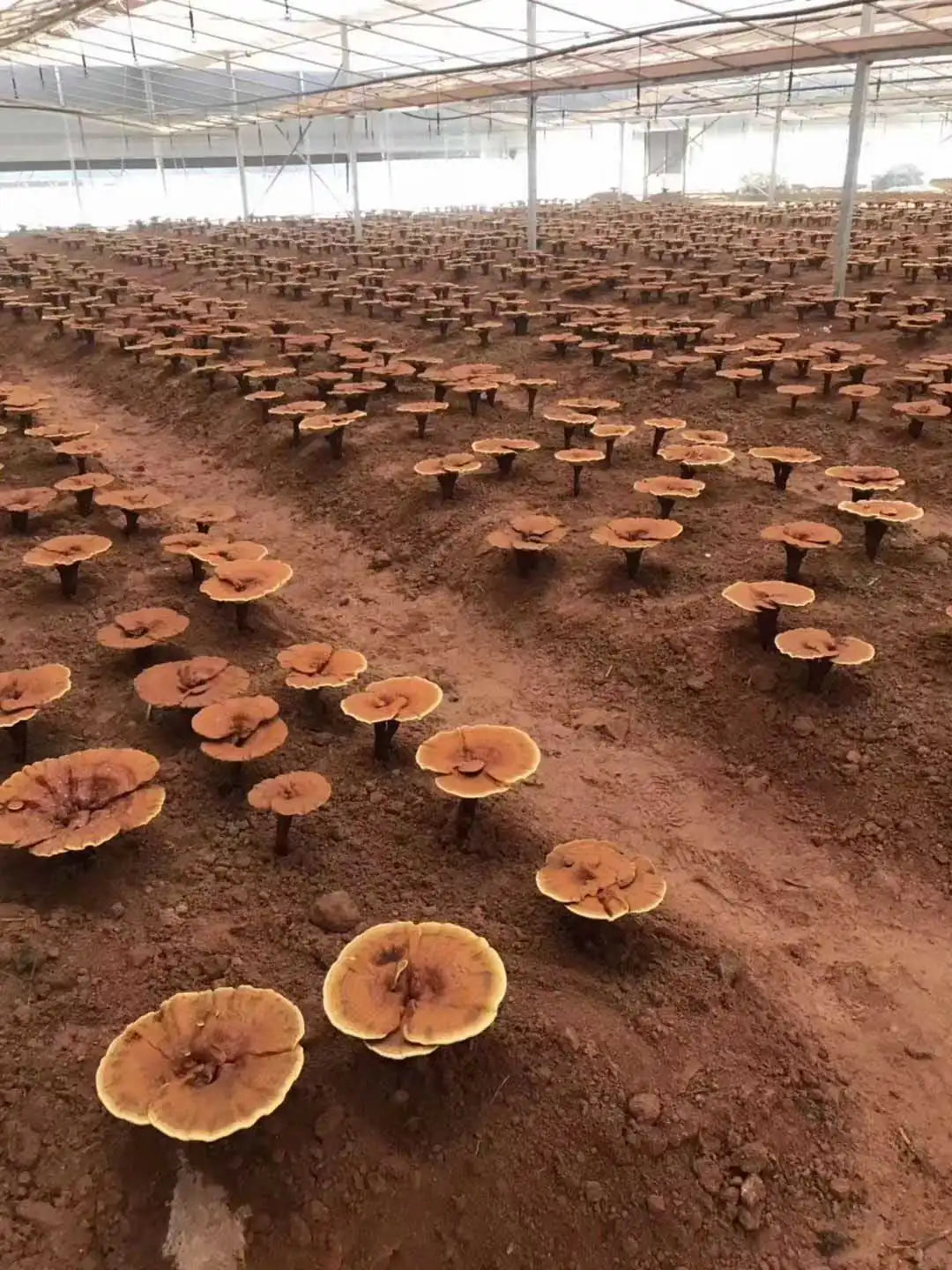
The traditional Chinese method of growing Reishi on hardwood logs is called Duanwood (literally "short wood" or "cut log"). Hardwood logs, typically oak or plum, are cut, inoculated with Reishi spores, and left to grow outdoors for 9 to 12 months or longer. The resulting fruiting bodies are dense, woody, and deeply bitter, which is actually a positive sign.
The Bitterness Test
Reishi is supposed to taste bitter. The bitterness comes from triterpenes, particularly ganoderic acids, which are among the most studied compounds in Ganoderma lucidum. If a Reishi product does not taste bitter at all, it is likely low in triterpenes, which often points to short growing times, poor extraction, or mycelium-based products rather than fruiting bodies.
This is a simple at-home quality check: dissolve a small amount of Reishi extract in warm water and taste it. A quality dual-extracted Reishi should be distinctly bitter. Not unpleasant, but unmistakably bitter.
What to Look for on the Label
A quality Reishi supplement should report specific compound data, not just vague claims about "full spectrum" or "potent" extracts. Here are the key compounds:
Ganoderic Acids (Triterpenes)
Ganoderic acids are a class of triterpene compounds unique to Ganoderma species. They are the most studied bioactive compounds in Reishi and are responsible for its characteristic bitterness. Over 130 different ganoderic acids have been identified in the scientific literature.
A quality Reishi extract should list its ganoderic acid or total triterpene content, verified by third-party testing. If a product does not mention triterpenes at all, it is likely not being tested for them.
Beta-Glucans (Polysaccharides)
Like all functional mushrooms, Reishi contains beta-glucans in its cell walls. These are extracted during hot water processing. Look for products that specifically report beta-glucan content, not just "polysaccharides." PStarch, fillers, and non-bioactive compounds can inflate polysaccharide testing
Polysaccharide vs Beta-Glucan: Why the Distinction Matters
Some Reishi products advertise "40% polysaccharides" or higher. This number can be misleading because standard polysaccharide tests (like the phenol-sulfuric acid method) measure all sugar-based molecules, including:
- Beta-glucans from fungal cell walls (the compounds you actually want)
- Starch from grain substrates (if the product is MOG-based)
- Polydextrose and other fillers that inflate test results
- Simple sugars with no functional significance
Beta-glucan-specific testing (such as the Megazyme method) is more accurate and harder to game. Always prefer products that report beta-glucan content over generic polysaccharide content.
We make this extract. Organic Reishi, dual-extracted, ganoderic acids verified.
Shop Reishi →Extraction Method: Why It Matters for Reishi Specifically
Reishi is one of the functional mushrooms where dual extraction makes the biggest difference, because its key compounds are split between two solubility profiles:
- Hot water extraction captures beta-glucans, polysaccharides, and some water-soluble triterpenes
- Ethanol extraction captures ganoderic acids, most triterpenes, and sterols that are not water-soluble
If a Reishi product uses only hot-water extraction, you are getting beta-glucans but missing most of the triterpene content. If it uses only ethanol, you get triterpenes but fewer beta-glucans. Dual extraction captures both.
Raw Reishi powder (dried mushroom ground into powder without extraction) has poor bioavailability because the bioactive compounds are locked inside chitin cell walls that the human digestive system cannot efficiently break down. Extraction is not optional for Reishi. It is essential.
Reishi Capsules vs Reishi Powder
Both forms can be equally effective if the extract quality is the same. The choice is mostly about convenience and usage preference:
| Capsules | Powder | |
|---|---|---|
| Convenience | Pre-measured, easy to take on the go | Requires measuring, but more is versatile |
| Dosing flexibility | Fixed dose per capsule | Adjustable, can increase or decrease freely |
| Taste | No taste (capsule shell) | Bitter (which is actually a quality indicator for Reishi) |
| Usage | Swallow with water | Mix into tea, coffee, smoothies, or warm water |
| Cost per serving | Slightly higher (capsule manufacturing cost) | Slightly lower |
Reishi powder works well in warm drinks, particularly tea. Its bitter, earthy flavour pairs naturally with chai spices, cacao, and cinnamon. If you enjoy the ritual of preparing a drink, powder gives you that. If you want the extract without thinking, capsules are the practical choice.
Red Flags: What to Avoid
- No triterpene or ganoderic acid data. If a Reishi brand does not test for triterpenes, it is ignoring the most distinctive class of compounds in its product.
- "Polysaccharide" percentages with no beta-glucan breakdown. High polysaccharide claims without beta-glucan-specific testing can mask low-quality products padded with starch or fillers.
- Mycelium-on-grain without disclosure. MOG Reishi products contain significant amounts of grain starch and far fewer triterpenes than fruiting body extracts.
- No extraction method stated. If the label does not specify how the extract was made, the product is likely raw powder or a basic hot water extract missing triterpenes.
- Growing time or method not mentioned. Log-grown Reishi takes 9 to 12 months to grow. If a brand does not mention its growing method, they are probably not using one worth talking about.
- No third-party lab results available. Any brand that cannot show you a Certificate of Analysis from an independent, ISO 17025-accredited laboratory should be viewed with scepticism.
- Reishi spore powder is mis-marketed as a complete product. Reishi spores are a different product category with a different compound profile. They are not a substitute for a fruiting body extract.
Reishi Dosage: How Much Should You Take?
There is no universally established clinical dose for Reishi, but general guidance based on traditional use and supplement industry standards:
| Form | Typical Daily Dose | Notes |
|---|---|---|
| Dual-extracted powder | 500mg to 1,500mg | Most concentrated form. Start at the lower end. |
| Extract capsules | 500mg to 1,500mg | Same as powder, pre-measured. |
| Reishi tea (raw slices) | 3 to 5 grams simmered for 1-2 hours | Traditional method. Only captures water-soluble compounds. |
| Tincture | 1 to 2 ml | Varies widely by concentration. |
Many people take Reishi in the evening due to its traditional association with rest. Unlike Cordyceps, which is typically taken in the morning, Reishi is often described as calming rather than stimulating. However, this is based on traditional use patterns rather than clinical evidence establishing optimal timing.
Consistency matters more than timing. Daily use over weeks is more relevant than any single dose.
Mycogenius Reishi Extract
Our Reishi is grown for over 11 months on hardwood logs using the traditional Duanwood method. Dual-extracted with verified ganoderic acid content, standardised to 1.5%. Every batch is third-party tested at an ISO 17025-accredited laboratory, and our Certificates of Analysis are published on our website.
Ready to try Reishi?
Organic dual extract. Over 1.5% ganoderic acids. Third-party tested.
Shop ReishiFrequently Asked Questions
What is the best Reishi mushroom supplement?
The best Reishi supplement is made from log-grown (Duanwood) fruiting bodies, dual-extracted using both hot water and ethanol, and independently tested for ganoderic acids and beta-glucans. The growing method is the most important quality factor. Log-grown Reishi takes 9 to 12 months to produce and yields denser fruiting bodies with higher triterpene content than bag-grown or mycelium-based products.
What is the difference between Reishi powder and Reishi extract?
Reishi powder can refer to either raw, dried mushroom ground into powder (low bioavailability, unextracted) or extracted Reishi in powder form. An extract has undergone hot-water and/or ethanol processing to break open chitin cell walls and concentrate bioactive compounds. Raw powder has not. Always choose an extract over raw powder for Reishi, as the chitin in unextracted Reishi makes it difficult for the human digestive system to access the bioactive compounds.
Should I take Reishi capsules or powder?
Both are equally effective if the extract quality is the same. Capsules are more convenient and have no taste. Powder is more versatile (can be added to tea, coffee, or smoothies) and lets you taste the bitterness, which is actually a quality indicator for Reishi. The bitter taste comes from triterpenes, particularly ganoderic acids.
How much Reishi should I take per day?
Most Reishi extract supplements recommend 500mg to 1,500mg daily. Traditional Reishi tea uses 3 to 5 grams of dried slices simmered for 1 to 2 hours. There is no established clinical dose from large-scale human trials, so these ranges are based on traditional use and supplement industry standards. Start at the lower end and adjust as needed.
Is organic Reishi better?
Organic certification ensures the mushrooms were grown without synthetic pesticides, herbicides, or chemical fertilisers. For log-grown Reishi, organic certification also applies to the wood substrate. It is a meaningful quality marker, but it does not indicate the extraction method, compound content, or third-party testing. Organic and independently tested is the combination to look for.
When should I take Reishi?
Many people take Reishi in the evening, as it is traditionally associated with rest. Unlike Cordyceps, Reishi is not typically considered stimulating. However, there is no clinical evidence establishing an optimal time of day. Consistency of daily use matters more than exact timing. You can read more about Reishi timing in our article: How Long Does Reishi Take to Work?
Mycogenius
Organic Reishi Extract
Dual-extracted from red Reishi fruiting bodies. Rich in ganoderic acids and beta-glucans. Every batch third-party tested.
Shop Organic Reishi Extract →★★★★★ Rated 4.7 on Trustpilot · Free shipping over €89
Get the Dosage & Timing Cheat Sheet
Exact amounts and best timing for all six species, on one page. Free PDF, straight to your screen.
Something went wrong; please try again.
You'll also get our occasional research-based newsletter. Unsubscribe any time.
Done. Here's your cheat sheet.
We've also emailed you a copy so you can find it later.
Download the PDFMycogenius Reishi Extract
Organic dual extract. Ganoderic acids ≥1.5%. Grown 9+ months on hardwood logs. Third-party tested.
★★★★★ 4.7 on Trustpilot
Shop Reishi