
How to Eat Lion's Mane Mushroom: Fresh, Cooked, and as an Extract
Lion's Mane mushroom (Hericium erinaceus) can be eaten fresh, cooked, dried, or consumed as an extract powder or capsule. Unlike tough, woody mushrooms like Reishi and Chaga, Lion's Mane has a soft, fleshy texture that works well in the kitchen. It is one of the few functional mushrooms that are both a culinary ingredient and a source of supplements.
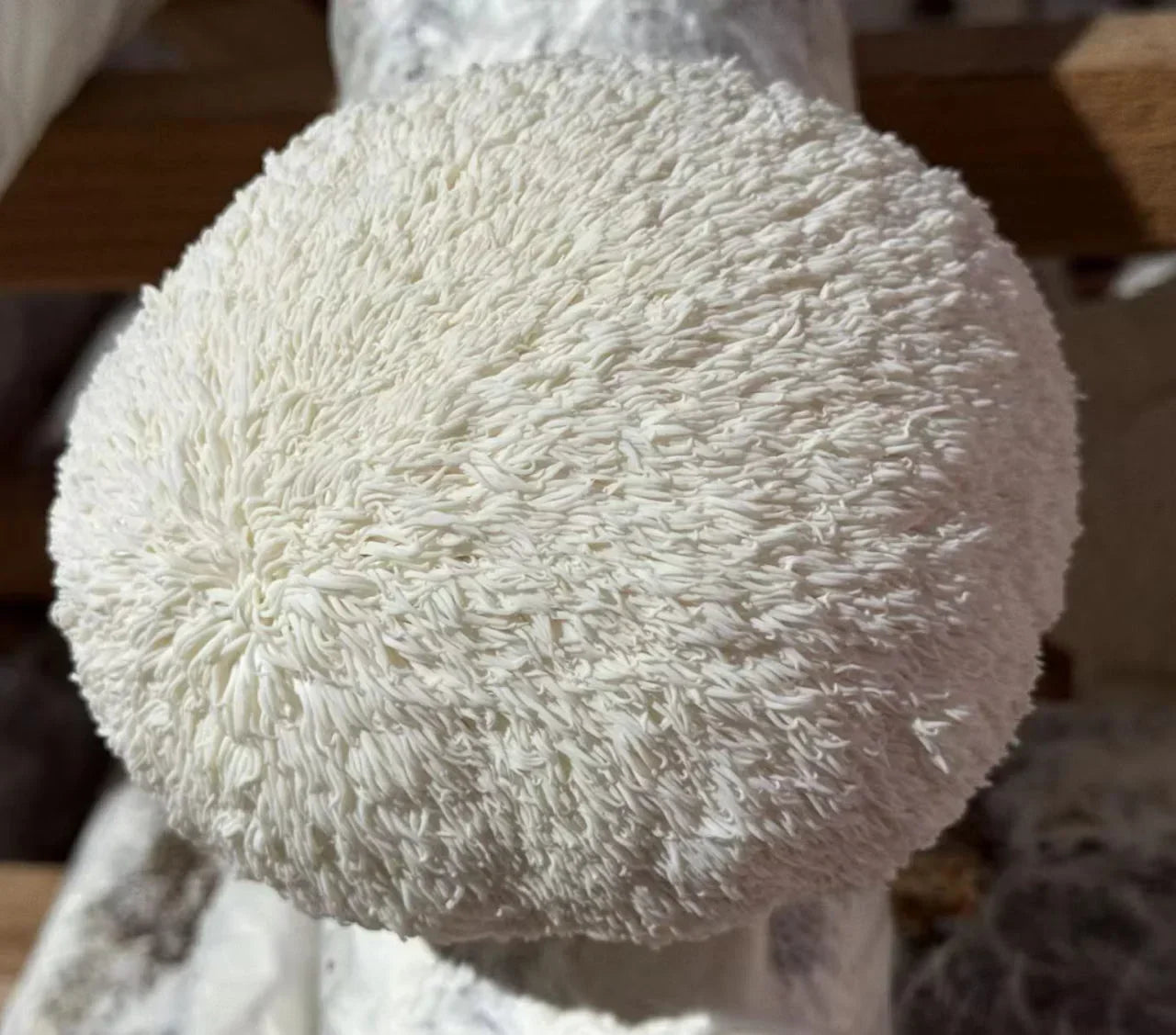
Fresh Lion's Mane looks like a white, shaggy ball of cascading spines, sometimes compared to a white pom-pom or a waterfall. When cooked, the texture becomes tender and slightly chewy, with a mild, slightly sweet flavour that many people compare to crab or lobster. This seafood-like quality makes it unusually versatile in recipes.
This guide covers three ways to use Lion's Mane: as a fresh culinary mushroom, as an extract powder in drinks and food, and in supplement form. Each method has distinct implications for the bioactive compounds you consume.
Eating Fresh Lion's Mane
If you can find fresh Lion's Mane at a farmers' market, speciality grocer, or from a local grower, it is worth trying as a culinary ingredient. It has become increasingly available in the UK and Ireland from small-scale cultivators.
How to Prepare Fresh Lion's Mane
- Do not wash under running water. Lion's Mane is porous and will absorb water like a sponge, making it soggy when cooked. Instead, gently brush off any debris with a dry cloth or soft brush.
- Tear or slice into steaks. Tear the mushroom into thick slices (about 1.5cm). Slicing creates more surface area for browning. Some people tear it into pulled chunks for a "crab cake" texture.
- Squeeze out excess moisture. Fresh Lion's Mane holds a surprising amount of water. Press the slices gently between kitchen towels before cooking to remove moisture. This helps achieve a golden sear rather than a steamed result.
The Best Way to Cook It: Pan Sear
Pan-searing is the most popular method because it develops a golden crust while keeping the interior tender:
- Heat a dry pan over medium-high heat (no oil yet)
- Place Lion's Mane slices in the pan and press down gently with a spatula
- Dry-sear for 2 to 3 minutes until golden on the bottom
- Add butter or olive oil, flip, and cook for another 2 to 3 minutes
- Season with salt, pepper, and a squeeze of lemon
The dry-sear step drives out remaining moisture and creates a much better crust than starting with oil. The result is golden-brown, slightly crispy on the outside, tender and juicy inside.
Simple Recipe Ideas
- Lion's Mane "steaks": Thick slices seared in butter with garlic, thyme, and a splash of white wine. Serve as a side dish or on toast.
- Lion's Mane "crab cakes": Shred or tear cooked Lion's Mane into pieces. Mix with breadcrumbs, egg, Dijon mustard, spring onions, and Old Bay seasoning. Form into patties and pan-fry until golden. The texture is remarkably similar to crab cakes.
- Pasta: Tear seared Lion's Mane into chunks and toss with pasta, olive oil, garlic, chilli flakes, and Parmesan.
- Soup: Add torn pieces to miso soup or a light broth-based soup in the last 5 minutes of cooking.
- Stir-fry: Slice thin and stir-fry with sesame oil, soy sauce, ginger, and vegetables.
Fresh Lion's Mane: Nutritional Profile
As a culinary mushroom, Lion's Mane is low in calories and a source of:
- Protein (for a mushroom, it has a relatively high protein content)
- Dietary fibre
- B vitamins (niacin, riboflavin, thiamine)
- Potassium, zinc, and selenium
- Ergothioneine (an amino acid with antioxidant properties found in many mushrooms)
Fresh Lion's Mane contains some hericenones and beta-glucans, but at lower concentrations than a concentrated extract. Cooking does not destroy beta-glucans (they are heat-stable), but the chitin cell walls limit how much your digestive system can access without extraction.
We make this extract. Organic Lion's Mane, third-party tested, full COA published.
Shop Lion's Mane →Using Lion's Mane Extract Powder
If your goal is to consume the bioactive compounds (hericenones, beta-glucans) in meaningful amounts, an extracted powder is more effective than a fresh mushroom. Extraction breaks open the chitin cell walls and concentrates the active compounds.
How to Use Lion's Mane Powder
- Coffee: Stir 500mg to 1,000mg into your morning coffee. Lion's Mane has a mild flavour that does not dramatically alter the taste of coffee. Some people find it slightly smooths the bitterness.
- Tea: Dissolve in hot water and drink as a simple tea. Add honey if desired.
- Smoothies: Blend into any smoothie. Lion's Mane powder mixes well with banana, berries, nut butter, and plant milk.
- Oatmeal or porridge: Stir into warm oats after cooking.
- Soups and broths: Add to miso soup, bone broth, or vegetable stock.
A dual-extracted Lion's Mane powder has already been through hot water and ethanol processing, so you do not need to simmer or cook it to release compounds. Simply dissolving it in any liquid is sufficient.
Fresh Lion's Mane vs Extract: What Is the Difference?
| Fresh (Culinary) | Extract (Supplement) | |
|---|---|---|
| What you get | Whole food nutrition, moderate bioactive compounds | Concentrated hericenones and beta-glucans |
| Bioavailability | Limited by chitin cell walls | High (chitin broken during extraction) |
| Typical serving | 100 to 200 grams of fresh | 500mg to 2,000mg extract |
| Best for | Culinary enjoyment, whole food nutrition | Consistent daily intake of specific bioactive compounds |
| Availability | Seasonal, perishable, not always easy to find | Shelf-stable, widely available year-round |
You do not need to choose one or the other. Fresh Lion's Mane is a genuinely delicious culinary mushroom worth cooking with when you can find it. An extract supplement is a practical way to consume specific bioactive compounds consistently. They serve different purposes.
How to Store Fresh Lion's Mane
- Refrigerator: Wrap loosely in a paper towel (not plastic wrap) and store in a paper bag in the fridge. Use within 5 to 7 days. Fresh Lion's Mane turns yellow as it ages, a sign of declining quality.
- Freezer: Slice, sear briefly, cool completely, then freeze in a single layer on a tray before transferring to a freezer bag. Frozen Lion's Mane works well in soups and stews, but will not sear as well as fresh.
- Dehydrator: Slice thin and dry at 50-60°C until completely crisp. Dried Lion's Mane can be rehydrated in warm water and used in soups or ground into a rough powder.
Mycogenius Lion's Mane Extract
For consistent daily use, our Lion's Mane extract powder dissolves easily into coffee, tea, or smoothies. Made from organically grown Hericium erinaceus fruiting bodies, dual-extracted, and third-party tested at an ISO 17025-accredited laboratory. View our Certificates of Analysis.
Ready to try Lion's Mane?
Organic 1:1 extract. Verified diterpenes and beta-glucans. ISO 17025 third-party tested.
Shop Lion's ManeFrequently Asked Questions
How do you eat Lion's Mane mushrooms?
Fresh Lion's Mane can be pan-seared, grilled, added to soups, stir-fries, or made into "crab cakes." Tear or slice into steaks, squeeze out excess moisture, and dry-sear in a hot pan before adding butter or oil. For bioactive compounds (hericenones, beta-glucans), use a dual-extracted powder dissolved in coffee, tea, or smoothies. Fresh culinary use and extract supplement use serve different purposes.
What does Lion's Mane taste like?
Fresh Lion's Mane has a mild, slightly sweet flavour often compared to crab or lobster. The texture when cooked is tender and slightly chewy, with a golden crust if properly seared. As an extract powder, it has a mild, slightly earthy flavour that blends well into coffee without dramatically altering the taste.
Can you eat Lion's Mane raw?
While not toxic raw, Lion's Mane is better cooked; cooking improves the texture, develops flavour, and helps break down some of the chitin in the cell walls. In general, raw mushrooms are harder for the human digestive system to process. For access to bioactive compounds, extraction (hot water + ethanol) is far more effective than eating raw.
Is fresh Lion's Mane as good a supplement?
They serve different purposes. Fresh Lion's Mane is a nutritious culinary mushroom with a moderate level of bioactive compounds. A dual-extracted supplement contains concentrated hericenones and beta-glucans with higher bioavailability (chitin broken during extraction). If your goal is a consistent daily intake of specific compounds, an extract is more effective. If you enjoy cooking with mushrooms, fresh Lion's Mane is excellent in the kitchen.
Where can you buy fresh Lion's Mane?
Fresh Lion's Mane is increasingly available at farmers' markets, speciality grocers, and directly from small-scale mushroom cultivators. In the UK and Ireland, local growers often sell through farmers' markets or online direct-to-consumer. It is a seasonal product (though indoor cultivation extends availability) and is perishable, so use within 5 to 7 days of purchase.
Get the Dosage & Timing Cheat Sheet
Exact amounts and best timing for all six species, on one page. Free PDF, straight to your screen.
Something went wrong; please try again.
You'll also get our occasional research-based newsletter. Unsubscribe any time.
Done. Here's your cheat sheet.
We've also emailed you a copy so you can find it later.
Download the PDFMycogenius Lion's Mane Extract
Organic fruiting body extract. Beta-glucans ≥35%. Third-party tested, batch COA published.
★★★★★ 4.7 on Trustpilot
Shop Lion's Mane




%20can%20be%20eaten%20fresh,%20cooked,%20dried,%20or%20consumed%20as%20an%20extract%20powder%20or%20capsule.%20Unlike%20tough,%20woody%20mushrooms%20like%20Reishi%20and%20Chaga,%20Lion's%20Mane%20has%20a%20soft...)