Do Mushroom Supplements Actually Work? What Nobody Tells You Before You Buy
The short answer is yes. The compounds found in functional mushrooms are real, measurable, and backed by a growing body of peer-reviewed research. Beta-glucans, hericenones, ganoderic acids, cordycepin — these are not marketing inventions. They are molecules with documented biological activity that have been studied in laboratories and clinical settings for decades.
But that is not the whole answer.
The more honest answer is this: most mushroom supplements on the market today do not contain what they claim to contain. And if the product you are taking does not contain meaningful concentrations of the compounds that originally interested you, it is unlikely to do anything for you.
This is not speculation. We tested it.
What We Found When We Tested 30 Lion's Mane Products
In collaboration with Emma Murphy, senior business development scientist at Shannon ABC, Technological University of the Shannon, and with funding from Enterprise Ireland, we commissioned independent laboratory analysis of 30 commercially available lion's mane extract samples.
We tested for three things: beta-glucan content, triterpenes, and hericenones C and D — the specific neuroactive compounds that generate most of the interest in lion's Mane as a supplement.
The results were sobering.
Beta-glucan content ranged from below 5% to 82%. That range alone should raise questions. A genuine lion's mane fruiting body extract typically contains between 30% and 40% beta-glucans. When a product registers at 82%, that is not exceptional quality. That is a strong indicator of manipulation or adulteration — usually the addition of cheap polysaccharide fillers that inflate the number on a standard beta-glucan assay.
At the other end, products coming in below 5% were essentially inert. These are not supplements. They are capsules filled with starch, grain, or ground-up mushroom biomass that has never been properly extracted.
The most striking finding was this: hericenones C and D — the specific compounds that have driven the lion's mane research in neuroscience — were not detected in meaningful concentrations in any of the 30 samples.
Only two out of 30 showed high-confidence triterpene identification.
Think about that for a moment. These products are being sold on the promise of cognitive benefits linked directly to hericenones. Consumers are paying for them, taking them daily, and in 28 out of 30 cases, the compounds responsible for those benefits are not there in any meaningful amount.
We are not the only ones finding this. A separate Italian market study analysed the 19 top-selling functional mushroom products in Italy and found that only six contained the species stated on the label. Almost all contained contaminants, with one exceeding European Commission safety limits.
Why Most Products Fail: The Steam-Treated Powder Problem
If the compounds are real and the research supports them, why are so many products coming up empty?
The answer is production quality. And the single biggest quality problem in the mushroom supplement industry today is steam-treated mushroom powder being marketed and sold as extract.
Here is what happens. Dried mushroom material is exposed to high-temperature steam. This is a sterilisation step — it kills microbial contaminants to meet the safety standards required for export, particularly from Chinese production facilities. Steam treatment does break down some chitin in the mushroom cell walls, making certain compounds marginally more accessible. But it is not extraction.
True extraction is a controlled chemical process. It involves dissolving specific classes of compounds from the mushroom material using carefully chosen solvents — typically hot water for polysaccharides and ethanol for less polar compounds such as triterpenes, hericenones, and ganoderic acids. The process concentrates these compounds, often over many hours, under specific temperature and pressure conditions.
Steam treatment does none of this. It is a hygiene measure that suppliers have repackaged as a value-add, knowing most brands will never test the finished product.
The result is a product that looks like an extract on the label but behaves like a powder in the lab. It will contain some beta-glucans — mushrooms naturally contain them — but not at the concentrations you get from genuine extraction. And it will contain little to no triterpenes, hericenones, or other ethanol-soluble compounds, because those molecules were never pulled out of the cellular matrix in the first place.
This is the gap between "mushroom supplements work" and "my mushroom supplement is not doing anything." The science is sound. In most cases, production is not.
We make these extracts. Organic, species-specific markers verified, full COAs published.
Shop All Extracts →How Fillers Inflate the Numbers
Even when a product has been tested, the results can be misleading. Here is why.
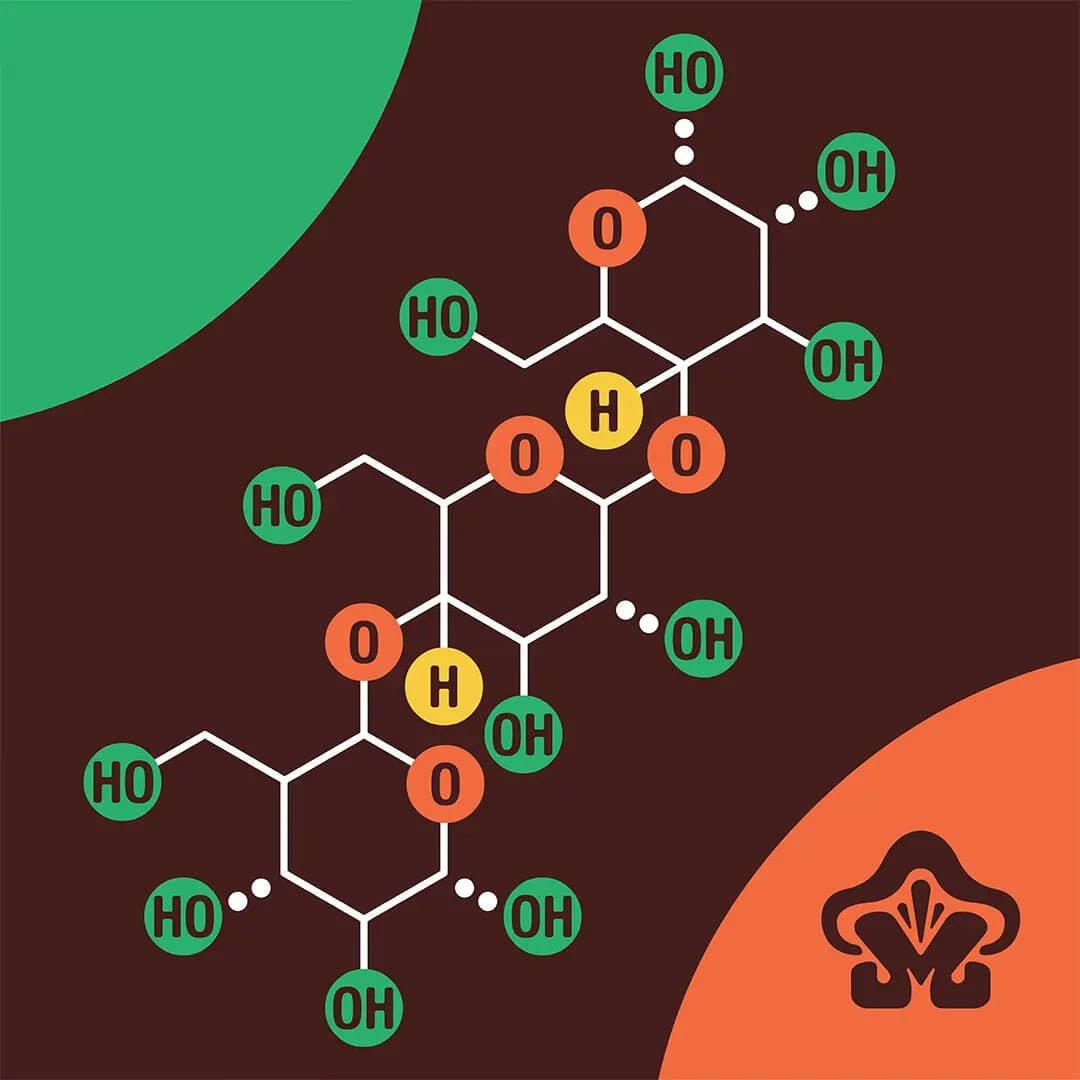
The most commonly cited quality marker for mushroom supplements is beta-glucan content. Brands will print "50% beta-glucans" or "60% beta-glucans" on the label, and consumers understandably assume higher is better. But the standard enzymatic assay used to measure beta-glucans — the Megazyme method — measures total polysaccharides minus alpha-glucans. It does not distinguish between genuine fungal beta-glucans and cheap polysaccharide fillers.
Polydextrose is one such filler. It is a synthetic polysaccharide made from glucose and sorbitol. It is cheap, widely available, and, when added to a mushroom product, inflates the beta-glucan reading in a standard assay. A product with 15% genuine beta-glucans can appear to contain 60% or more if enough polydextrose is added.
This is not a theoretical concern. Products registering above 50% beta-glucan content without a corresponding presence of species-specific secondary metabolites are exhibiting the hallmark of adulteration.
The only reliable way to catch this is through more advanced analytical methods. Nuclear magnetic resonance (NMR) spectroscopy, as used by laboratories like Purity-IQ, can confirm species identity, detect fillers, and verify the actual compound profile of a finished product. It compares the molecular fingerprint of a sample against validated reference materials. If polydextrose is present, it shows up. If the mushroom species is wrong, it shows up. There is no way to fake an NMR profile.
But NMR testing is expensive, and the vast majority of mushroom supplement brands never use it. They rely on the standard assay, which is exactly why the filler strategy works.
Even If Your Product Is Good, Your Microbiome Might Decide Whether It Works
So far we have been talking about product quality. If the product does not contain the compounds, nothing happens. Full stop.
But here is the part almost nobody in this industry discusses: even if you have a genuinely well-made product, the effect may depend on the state of your gut microbiome.
The clearest demonstration of this comes from a 2021 study published in Scientific Reports by Yao and colleagues at Zhejiang University and Hangzhou Medical College. They were studying Reishi (Ganoderma lucidum) and sleep.
The researchers gave mice a Reishi extract (specifically the acidic fraction of an alcohol extract of the mycelium) for 28 days. The mice fell asleep faster and slept longer. The Reishi increased serotonin in the hypothalamus and upregulated genes in the serotonergic pathway. So far, a standard mushroom study.
But here is the twist. The researchers also wiped out the gut microbiome in a second group of mice using a broad-spectrum antibiotic cocktail. Same Reishi extract. Same dosing. Same protocol.
In the microbiome-depleted mice, the sleep benefit vanished entirely. No reduction in sleep latency. No increase in sleep duration. The altered faecal metabolites that correlated with the sleep effect in the first group also disappeared.
The Reishi did not work on its own. It worked through the gut microbiome. Enrich Bifidobacterium, produce specific metabolites like indole-3-carboxylic acid and acetylphosphate, and these metabolites feed back into the serotonin pathway that regulates sleep. Remove the bacteria, and the chain breaks.
This is not an isolated finding. A growing body of research is converging on the same conclusion: many of the effects attributed to functional mushroom compounds are not direct effects. The gut microbiome mediates them. The beta-glucans and polysaccharides that make mushrooms interesting are largely indigestible by humans. They reach the colon intact, where bacteria ferment them into short-chain fatty acids and other metabolites. Those metabolites, not the original compounds, may be doing the actual work.
Which raises an uncomfortable possibility. If you take a high-quality mushroom extract but your gut microbiome is compromised, whether from antibiotics, poor diet, chronic stress, or something else entirely, you may not get the benefit. Not because the product is bad. Because your internal ecosystem is not in a state to do anything.
This might explain something many people in this space have noticed, but nobody can quite account for: the same product works brilliantly for one person and does nothing for another. The usual explanation is "everyone is different." That is true but unhelpful. The gut microbiome gives a more specific mechanism. If the bacteria that metabolise mushroom compounds are absent or depleted, the downstream effects do not occur.
Nobody is testing for this. No supplement brand is asking customers about their microbiome status before recommending a product. No clinical trial in this space stratifies participants by gut health. It is a blind spot that may be bigger than the product quality problem.
Extraction Is Species-Specific (And Most Brands Get It Wrong)
Even among brands that do perform genuine extraction, many use a one-size-fits-all approach: hot water extraction for everything. This misses an entire class of bioactive compounds.
Different mushroom species store their valuable compounds in different molecular forms, and those forms require different solvents to extract. A genuinely comprehensive extraction process is tailored to the species.
Lion's Mane (fruiting body): Ethanol extraction first, then hot water. The ethanol pull comes first because hericenones — the neuroactive diterpenes that drive most of the research interest in Lion's Mane — are heat-sensitive and alcohol-soluble. If you run hot water first, you risk degrading them. The subsequent hot-water step extracts beta-glucans and other water-soluble polysaccharides.
Reishi (fruiting body): Ethanol first, then hot water. The priority compounds are ganoderic acids — triterpenes that are ethanol-soluble. Hot water follows for polysaccharides. Reishi is also a case where growing conditions matter enormously. A Reishi mushroom grown for over nine months on hardwood logs will have a fundamentally different compound profile to one harvested at five months from a grain substrate. The longer growth period allows for greater triterpene accumulation.
Cordyceps CS-4 (mycelium): Hot water first, then ethanol precipitation. This is the opposite order, and for good reason. CS-4 is a liquid-fermented mycelium — not a fruiting body — and its primary bioactives (cordycepin, adenosine, and polysaccharides) are water-soluble. The ethanol step here is not an extraction but a precipitation: it is used to precipitate the polysaccharides from the aqueous extract for purification and concentration.
Chaga (sclerotia): Ethanol first, then hot water. Betulinic acid and sterols are the priority, both ethanol-soluble. Water follows for polysaccharides.
A brand using only hot water extraction across all species will capture some beta-glucans but miss the triterpenes, hericenones, ganoderic acids, and betulinic acid that make each species distinct. A brand using only ethanol will miss the polysaccharides. A brand doing dual extraction but in the wrong order for the species risks degrading heat-sensitive compounds.
This is one of the reasons why extraction ratios like "10:1" or "15:1" on supplement labels are essentially meaningless. A ratio tells you nothing about which solvents were used, in what order, at what temperature, for how long, or whether the target compounds survived the process. Without independent testing of the finished product for species-specific bioactives, extraction ratios are marketing, not quality markers.
What Proper Testing Actually Looks Like
If the label cannot tell you whether a product works, what can?
A certificate of analysis (COA) from an ISO/IEC 17025-accredited laboratory, testing the finished product — not the raw material, not the supplier's certificate, but the actual product in the actual container you are buying.
Here is what a meaningful COA should include:
Species verification. DNA or molecular confirmation that the product contains the mushroom species stated on the label. Given that only six out of 19 products in the Italian study contained the correct species, this is not optional.
Beta-glucan content. Tested using the Megazyme K-YBGL method or equivalent, with a corresponding alpha-glucan/starch test to rule out grain contamination.
Species-specific bioactive markers. This is the test most brands skip. For lion's mane, it means quantifying hericenones (and erinacines, if mycelium-derived). For Reishi, ganoderic acids. For cordyceps, cordycepin. For chaga, betulinic acid. If a product claims to contain a specific mushroom but shows no detectable levels of the compounds that make that mushroom valuable, it does not matter what the beta-glucan number says.
Heavy metals and contaminant screening. Lead, mercury, cadmium, arsenic — standard for any reputable supplement.
Microbial testing. Total plate count, yeast and mould, coliforms, E. coli, Salmonella.
The distinction between supplier COAs and finished-product COAs matters more than most consumers realise. A supplier COA tests the raw extract powder before it is formulated, encapsulated, or packaged. It tells you what the ingredient was before the brand received it. A finished-product COA tests what is actually in the capsule or pouch you buy. The two are not always the same.
Brands that publish batch-specific, finished-product COAs from ISO 17025-accredited laboratories and make them accessible via QR codes or on their website are operating to a different standard than brands that state "third-party tested" on the label without any supporting documentation.
So, Do They Work?
Yes. But only if the product you are taking is what it claims to be. And possibly only if your gut is in a state to do something with it.
The science behind functional mushroom compounds is legitimate and growing. Beta-glucans have documented immunomodulatory activity. Hericenones and erinacines stimulate nerve growth factor synthesis in laboratory studies. Ganoderic acids show activity in stress-response pathways. Cordycepin has been studied for its effects on cellular energy metabolism.
The problem is not the science. The problem is the gap between what the science studies and what most consumers actually swallow.
When a clinical study uses a standardised, properly extracted lion's mane preparation and observes measurable effects, that result applies to that specific preparation. It does not automatically apply to every Amazon product with a picture of a lion's mane mushroom on the label. If the product being sold is steam-treated powder with no detectable hericenones, the study is irrelevant to that product.
This is the uncomfortable truth the industry avoids: the research works, but most products do not contain what the research used.
What to Look for Before You Buy
If you are new to mushroom supplements or questioning whether your current product is doing anything, here is what to check:
Is it an extract or a powder? Look for "extract" on the label, but verify this with testing data. A genuine extract will show concentrated levels of beta-glucans (typically 25%–40% for fruiting body products) and species-specific secondary metabolites. If the brand cannot provide this data, the word "extract" is unverified.
Is it fruiting body, mycelium, or mycelium-on-grain? Fruiting body extracts contain higher concentrations of beta-glucans and triterpenes. Mycelium-on-grain products contain significant amounts of grain starch, which dilutes the active compounds. Check the supplement facts panel — if it lists "mycelium biomass" or shows high starch content, you are paying for grain.
Can you see the COA? Not a generic quality guarantee page. An actual, batch-specific certificate of analysis from a named, accredited laboratory. If the brand does not publish COAs, ask for one. If they cannot provide it, that tells you everything you need to know.
Does the COA test for species-specific compounds? A beta-glucan number alone is not enough. For lion's mane, look for hericenone data. For Reishi, ganoderic acid content. For cordyceps, cordycepin. If the COA only shows beta-glucans and heavy metals, the brand is testing for safety but not for efficacy.
Who did the testing? The laboratory should be ISO/IEC 17025-accredited. This is the international standard for testing and calibration laboratories. It ensures the lab follows validated methods and operates without conflicts of interest.
The Bottom Line
Mushroom supplements can work. The biology is real, the compounds are measurable, and the research base is growing every year. But "can work" is not the same as "will work," and the difference comes down to two things: what is inside the product, and what is inside you.
The majority of mushroom supplements on the market today are either steam-treated powders sold as extracts, mycelium-on-grain products diluted with starch, or formulations padded with fillers that inflate the numbers on a standard beta-glucan test. These products will not deliver the results described in the research because they do not contain the compounds measured in the research.
The brands doing it properly — genuine dual extraction, species-specific protocols, finished-product testing at ISO 17025-accredited labs, published COAs — exist. But they are the minority.
And even if you find one of them, pay attention to your gut. If you have recently taken antibiotics, if your diet is narrow, if you are under chronic stress, your microbiome may not be in a position to produce the metabolites that make mushroom compounds actually do something. The product is necessary but not sufficient. The ecosystem matters too.
Your job as a consumer is to know the difference. Your job as a body is to make sure the bacteria are there to do the work.
Find your extract
Organic mushroom extracts. Species-specific potency verified. Third-party tested.
Browse All ProductsReferences
Yao, C., Wang, Z., Jiang, H. et al. Ganoderma lucidum promotes sleep through a gut microbiota-dependent and serotonin-involved pathway in mice. Sci Rep 11, 13660 (2021). https://doi.org/10.1038/s41598-021-92913-6
Frequently Asked Questions
Do mushroom supplements actually do anything?
Yes, when they contain what they claim. The bioactive compounds in functional mushrooms — beta-glucans, hericenones, ganoderic acids, and cordycepin — have been documented to have biological activity in peer-reviewed research. However, independent testing of commercial products shows most contain little to no detectable levels of these compounds. The product's quality determines whether it will have any effect.
Why is my mushroom supplement not working?
The most common reason is that the product does not contain meaningful concentrations of the bioactive compounds responsible for the effects you are expecting. Many products sold as "extracts" are actually steam-treated powders or mycelium-on-grain preparations that have never undergone proper extraction. Without extraction, the target compounds remain locked in the chitin matrix and are not bioavailable.
How can I tell if a mushroom supplement is high quality?
Look for three things: a genuine dual extract (hot water and ethanol), a batch-specific certificate of analysis from an ISO/IEC 17025-accredited laboratory, and testing data showing species-specific compounds (not just beta-glucans). If the brand cannot provide any of these, the product's quality is unverified.
What is the difference between mushroom extract and mushroom powder?
Mushroom powder is dried, ground mushroom material. It retains the full cellular matrix, meaning many bioactive compounds remain trapped in chitin and are poorly absorbed. Mushroom extract is produced through a controlled process using hot water, ethanol, or both, which dissolve and concentrate specific compounds. Extracts typically contain significantly higher levels of bioactive substances and are more bioavailable.
Are high beta-glucan numbers always better?
Not necessarily. Genuine fruiting body extracts typically contain 25% to 40% beta-glucans. Readings above 50% or 60% may indicate the addition of polysaccharide fillers like polydextrose, which inflate the result on standard beta-glucan assays without providing any of the biological activity associated with fungal beta-glucans. A moderate beta-glucan number accompanied by verified species-specific compounds is a better indicator of quality than an unusually high beta-glucan number on its own.
What does "third-party tested" actually mean?
It should mean that an independent, accredited laboratory with no financial connection to the brand has tested the finished product. In practice, many brands use this phrase to describe supplier-provided certificates of analysis, which test the raw ingredient before formulation — not the finished product you buy. Always ask which laboratory conducted the testing, whether it was the finished product or raw material, and whether the COA is available for your specific batch.
Get the Dosage & Timing Cheat Sheet
Exact amounts and best timing for all six species, on one page. Free PDF, straight to your screen.
Something went wrong; please try again.
You'll also get our occasional research-based newsletter. Unsubscribe any time.
Done. Here's your cheat sheet.
We've also emailed you a copy so you can find it later.
Download the PDFMycogenius Lion's Mane Extract
Organic fruiting body extract. Beta-glucans ≥35%. Third-party tested, batch COA published.
★★★★★ 4.7 on Trustpilot
Shop Lion's Mane