The First Randomised Trial on Maitake and Memory Is Here. Here's What It Found.
If you follow functional mushroom research, you've probably noticed that most of the conversation around cognition centres on one species: Lion's Mane. There are good reasons for that. The Mori et al. (2009) trial on Lion's Mane and mild cognitive impairment is one of the most-cited studies in the field.
But a new paper published in the Journal of Nutritional Science and Vitaminology suggests the relationship between mushrooms and cognitive function may run deeper than a single species.
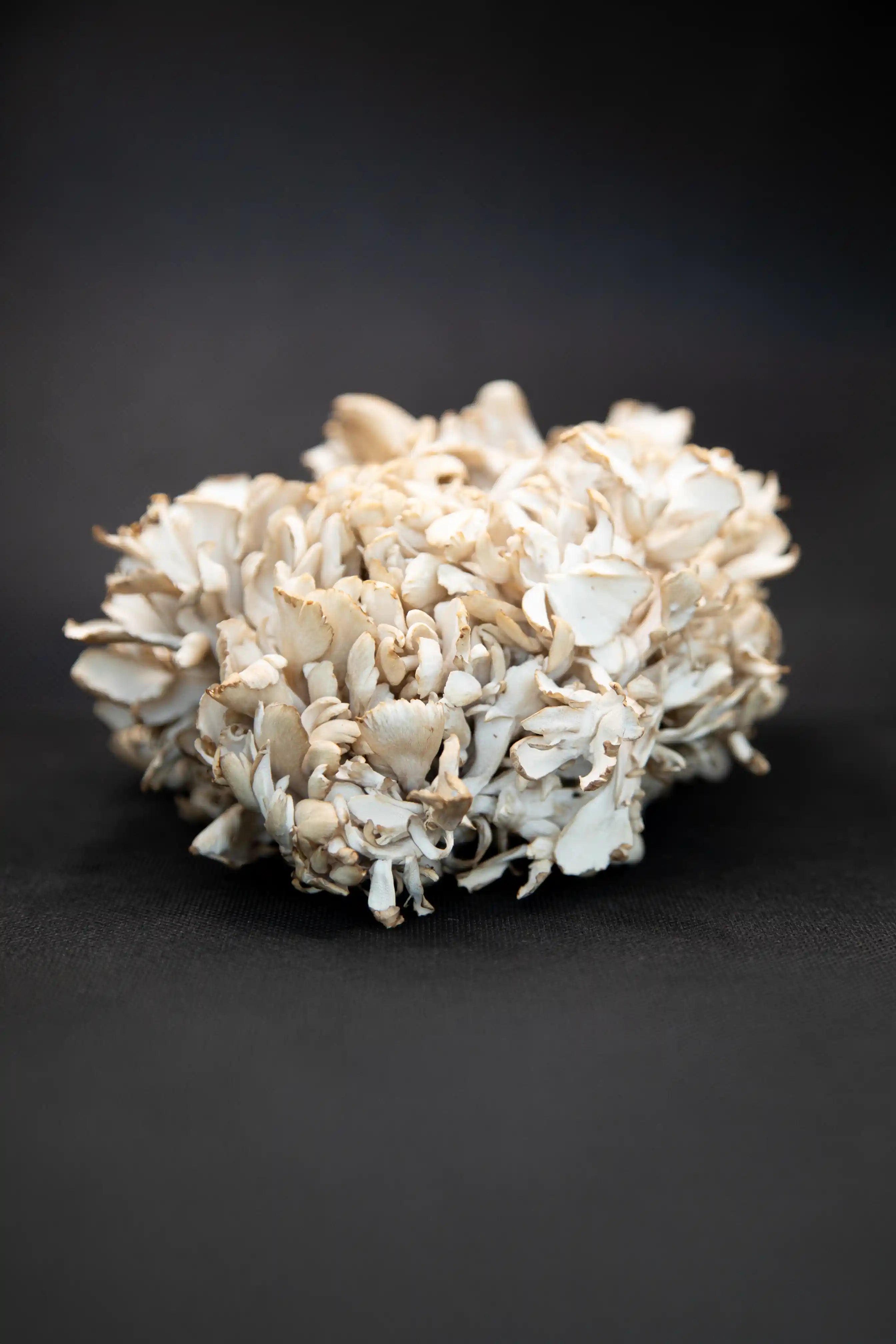
Jogi et al. (2026) just published the first randomized, double-blind, placebo-controlled trial testing maitake mushroom (Grifola frondosa) specifically for cognitive function in healthy older adults. No animal models. No observational data. A proper RCT.
Here's what they found.
The setup
47 healthy Japanese adults aged 60 and over were randomly assigned to one of three groups. Two groups consumed bread containing 50 grams of maitake mushroom daily for 18 weeks, each group receiving a different maitake strain (Y10M and C5304). The third group received plain bread as a placebo.
Cognitive function was measured at baseline and after 18 weeks using three validated screening tools: the MMSE, HDS-R, and MoCA-J (the Japanese version of the Montreal Cognitive Assessment).
To confirm participants were actually absorbing the maitake, the researchers measured blood ergosterol levels. Ergosterol is a lipid found almost exclusively in fungi, making it an effective biomarker for mushroom consumption.
The results
The Y10M maitake group showed a statistically significant improvement in MoCA-J total score compared to placebo (p=0.045). When the researchers looked at the MoCA-J subscales, the improvement was driven specifically by the memory domain (p=0.024).
Neither the MMSE nor HDS-R detected significant differences between groups, but the researchers note this is consistent with how these tools perform. The MoCA-J is considered more sensitive for detecting subtle cognitive changes, particularly in healthy populations where decline is mild.
The C5304 strain group did not show significant cognitive improvement, which points to something the researchers discuss at length: strain matters. Two mushrooms of the same species, grown differently, can produce different outcomes.
We make these extracts. Organic, species-specific markers verified, full COAs published.
Shop All Extracts →The mechanism: NK cells and the brain
This is where the study gets particularly interesting.
The researchers measured natural killer (NK) cell activation before and after the 18-week intervention. NK cells are part of the innate immune system, and recent research has increasingly linked systemic immune activation to brain function.
The Y10M group showed significantly increased CD69 expression on NK cells compared to placebo. More importantly, the change in NK cell activation positively correlated with the change in MoCA-J scores (R=0.338, p=0.027).
The proposed pathway: maitake polysaccharides (beta-glucans) activate NK cells, potentially contributing to cognitive maintenance through immune-mediated mechanisms. Previous research has shown that NK cells can clear amyloid-beta in the brain and improve microglial function, offering a plausible biological link between immune activation and cognitive performance.
This matters because beta-glucans are not unique to maitake. They're the primary bioactive polysaccharides in Lion's Mane, Reishi, Chaga, Cordyceps, and most other functional mushroom species. If the immune-cognition pathway holds up in larger studies, it could help explain why multiple mushroom species appear to support cognitive function through different, overlapping mechanisms.
Limitations worth noting
The study is rigorous in design but has clear limitations that the authors are transparent about.
The sample size is small (47 participants, roughly 14-17 per group). The population is exclusively healthy older Japanese adults, so results may not generalize to other demographics. Diet was unrestricted beyond the bread intervention, and genetic or lifestyle factors were not controlled for.
The study was funded by YUKIGUNI FACTORY Co., Ltd., a maitake mushroom manufacturer. The authors state that the sponsor did not influence data collection or analysis and that the conflict of interest is disclosed. Still, it's worth noting when evaluating any industry-funded research.
What does this mean for the broader picture?
This isn't a study you'd build a product claim on. It's a single trial with a small sample.
But it's a meaningful addition to a growing body of evidence that functional mushrooms interact with cognitive function through multiple biological pathways, not just the direct neurotrophic effects most often associated with Lion's Mane.
The fact that strain-specific differences produced different outcomes also reinforces something we think about constantly: sourcing, cultivation, and extraction methods aren't marketing details. They're variables that change what the mushroom actually does.
If you want to read the full paper: Jogi EM et al. "Maitake Mushroom (Grifola frondosa) Enhances Cognitive Function in Healthy Older Japanese: A Randomised, Double-Blind, Placebo-Controlled Trial." J Nutr Sci Vitaminol, 72, 163-175, 2026.
This article is for educational purposes only. It is not intended to diagnose, treat, cure, or prevent any disease. Mycogenius does not sell maitake mushroom products.
Ready to try our extracts?
Organic mushroom extracts. Species-specific quality markers verified. ISO 17025 third-party tested.
Shop All ExtractsFrequently Asked Questions
What did the first randomised trial on Maitake find?
The trial found that participants taking a Maitake extract showed improvements in memory-related outcomes compared to the placebo group. It was one of the first properly controlled human studies on Maitake and cognitive outcomes, making it a notable addition to the limited body of clinical evidence for functional mushrooms.
What is Maitake mushroom?
Maitake (Grifola frondosa) is an edible mushroom that grows at the base of oak and other hardwood trees. Also known as "hen of the woods," it has a long history of use in traditional Japanese and Chinese cuisine and herbal practice. It is now widely available as a dietary supplement, typically as a hot water or dual extract.
What dose of Maitake was used in the study?
The specific dose used in the trial should be referenced from the published study. Clinical trials on mushroom extracts typically use standardised doses measured in milligrams per day, with the extract type and beta-glucan content specified. Always check the original paper for exact dosing protocols before drawing conclusions.
How does Maitake relate to immune function research?
Maitake has been studied for its beta-glucan content, particularly a fraction known as Maitake D-fraction. Research has explored how these polysaccharides interact with immune cells, though most of this work has been conducted in vitro or in animal models. The memory trial adds a new dimension by looking at cognitive rather than immune-related outcomes.
Why do properly controlled mushroom trials matter?
Much of the existing research on functional mushrooms comes from in vitro studies, animal models, or poorly designed human trials without proper controls. A randomised, placebo-controlled trial provides a much higher standard of evidence. As more rigorous trials are published, consumers and practitioners can make better-informed decisions about which mushroom products have meaningful clinical backing.
Get the Dosage & Timing Cheat Sheet
Exact amounts and best timing for all six species, on one page. Free PDF, straight to your screen.
Something went wrong; please try again.
You'll also get our occasional research-based newsletter. Unsubscribe any time.
Done. Here's your cheat sheet.
We've also emailed you a copy so you can find it later.
Download the PDFMycogenius Organic Mushroom Extracts
Species-specific potency verified. Third-party tested in ISO 17025 labs. Batch COAs published.
★★★★★ 4.7 on Trustpilot
Shop All Extracts